Thursday, May 26, 2016

Asiatic lion in Mysuru zoo dies

It was suffering from kidney and liver problems

After the death of a male African cheetah at the zoo last month, an Asiatic lion, which was eight years and two months old, breathed its last on Monday.
The lion, Shankar, had been brought to the zoo five years ago from Sakkarbaugh Zoo, Junagadh, Gujarat.
Zoo authorities said the lion had become dull and stopped eating since April 30. On May 2, the animal was taken into the squeeze cage and treatment begun.
“We got in touch with veterinarians of Hyderabad Zoo Lion Safari and Shivamogga Lion Safari on treating the animal. On May 7, C. Ansar Kamran, Department of Medicine, Veterinary College, Hassan, was called and his opinion sought,” said zoo executive director S. Venkatesan.
Blood examination revealed that the animal was suffering from kidney and liver problems, the zoo executive director, said in a release.
Nevertheless, the treatment continued since then following Prof. Ansar Kamran’s advice. Till Monday morning, the animal showed no interest in food.
With the death of the lion, the zoo is now left with an Asiatic lioness, Gowri, who was brought along with Shankar from Gujarat under an exchange programme.
But Gowri too has health problems and has not fully recovered from an ailment despite treatment. Gowri had once delivered a cub which did not survive.
Asiatic lions have been listed as endangered species, found only in the Gir forest in Gujarat. Sakkarbaug Zoo is famous for breeding Asiatic lions.

http://www.thehindu.com/todays-paper/asiatic-lion-in-mysuru-zoo-dies/article8578448.ece

A 9 Year-Old Asiatic Lion Drowned After Falling Into Jamni River In Amreli District


A 9 Year-Old Asiatic Lion Drowned After Falling Into Jamni River In Amreli District
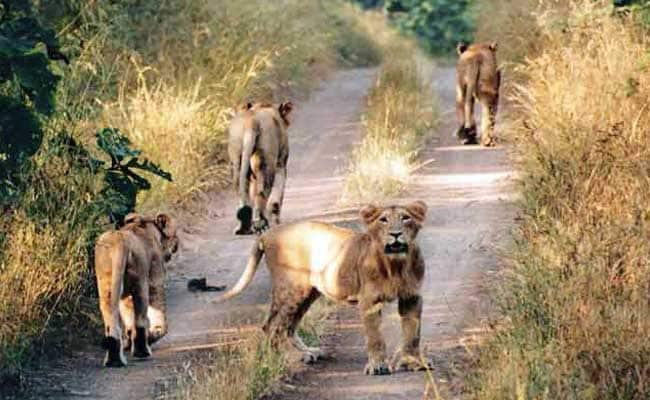
Nine-year-old male lion slipped into the river and drowned. (Representational Image)

Vadodara: 

Highlights

  1. Incident occured on May 4, the lion slipped from a 35-foot high hilltop
  2. Forest officials found the lion's carcass floating in the river
  3. The 2015 Lion Census pegged their population at 523
"The incident occurred on May 4 (Wednesday) in Dhari forest range area when the nine-year-old male lion slipped into the river from a 35 feet-high hilltop," Amreli's acting District Forest Officer C P Ranpariya told PTI.

The incident came to light when patrolling staff of the Forest Department saw the big cat's carcass floating in the river and fished it out, he said.

Injuries found on the posterior side of the body indicate that a crocodile fed on it, he said, but ruled out any fight between the two.

A post-mortem conducted on the spot confirmed that the lion died of drowning, he said, adding, the lion may have fallen into the river about three days ago.

Asiatic lions are an endangered species and their only wild population in the world is surviving in Gir forests and adjoining areas in Saurashtra region of Gujarat, the official said.

The Lion Census of 2015 had pegged the number of the top predator at 523, he said, and added that 197 Asiatic lions inhabit the Dhari range.

http://www.ndtv.com/india-news/a-9-year-old-asiatic-lion-drowned-after-falling-into-jamni-river-in-amreli-district-1403950

ZSL London Zoo's Land of the Lions Takes Themed Design to a New Territory

ZSL London Zoo's Land of the Lions Takes Themed Design to a New Territory

5 May 2016ZSL London Zoo’s newest exhibit, Land of the Lions, connects visitors with the big cats and their native habitat like never before.

Highly detailed immersive theming has transformed 2,500m² of England’s capital zoo into the Gir region of India complete with a train station, Hindu temple and a street of shops.

The Endangered Asiatic lions wander close to the manmade structures as they do in the wild and visitors are afforded exceptional views.

The exhibit is further brought to life by chance encounters with other animals native to the region in authentic settings including langur monkeys 'raiding' one of the shops.
Blooloop spoke to the project’s lead designers, Ray Hole Architects, ZSL London Zoo and specialist theming company, Paragon Creative, about the rewards and challenges they faced when creating the largest and most immersive exhibit in the zoo’s history.
ZSL London Zoo Land of the Lions Immersive Exhibit

A Matter of Pride

“Our number one inspiration was our Asiatic lion pride,” says Robin Fitzgerald, Senior Project Manager at ZSL London Zoo.  “We wanted to create an incredible new home for our London-born lionesses Heidi (above), Rubi and Indi and our newest resident Bhanu, who joined us from Assiniboine Zoo in Winnipeg, Canada.
“Then, we were inspired by the Asiatic lions’ wild home in the Gir National Park, along with the village of Sasan Gir, where the community lives in such close proximity to the wild lions.”
ZSL London Zoo Land of the Lions Immersive Exhibit Gir Forest
“The interesting aspect is how the locals of the area live extremely closely yet harmouniously alongside  the lions and how their paths cross on an almost daily basis as the lions wander into the villages,” agrees Paragon Creative’s David Johnson. “The theming and detail of the area is all based upon this concept.”
Fitzgerald adds, “We wanted to communicate the message that Asiatic lions only exist in the wild in this one small area in India, so were tasked with recreating parts of the region in the exhibit to support this messaging.”
ZSL London Zoo Land of the Lions Immersive Exhibit

Balancing Animal Husbandry with Visitor Experience

In order to create an authentic setting, the zoo carried out extensive research, sending a design team out to India to experience the Gir region at first hand.
“We had to balance animal husbandry with visitor experience and this directly translated into the creation of the landscape,” explains Fitzgerald.
“We researched the typical planting soil and topography found in the Gir region and balanced this with visitor viewing area requirements while always keeping lion welfare at the forefront of our plans. It was paramount that they have an engaging environment with, for example, heated snoozing rocks, high viewing platforms and both sunny and shaded areas."
ZSL London Zoo Land of the Lions Immersive Exhibit Gir Forest
“This exhibit also differed from others before it as we looked at the region as a whole, its people and customs and the human/animal interaction that takes place there, which is truly unique. So the railway platform, ranger’s house and the high street are all there to tell the story of how close and special this interaction is.
“We also had the benefit of the Conservation Programme Field team, which was set up as part of this project to fully understand the issues and daily challenges of conservation in the region.”
ZSL London Zoo Land of the Lions Immersive Exhibit Asiatic Lions

A Courageous Commission

Ray Hole of Ray Hole Architects describes the zoo as ‘very courageous’ for commissioning a project of such scope:
“The overriding purpose of this new exhibit is that it becomes a fundamental part of ZSL’s mission – aimed not only at bringing increased awareness to the ongoing plight of the last stronghold population of this IUCN Redlist(ed) Endangered subspecies (estimated to be 523 animals in 2015), but also form part of an European Endangered Species Programme, dedicated to growing a genetically healthy and thriving captive population.”

Visitor & Animal Environments

Once the area for the new exhibit had been identified, the next step was to define the project’s strategic brief.
ZSL London Zoo Land of the Lions Immersive Exhibit
It was decided that 4 principal animal environments and 5 visitor environments were required:
Animal Environments
  • Asiatic Lions – to occupy 2 contrasting environments
  • Hanuman Langurs – to occupy 2 interconnected areas
  • Vultures
  • Plus a number of other species – Flamingo, Mongoose and Muntjac
ZSL London Zoo Land of the Lions Immersive Exhibit
Visitor Environments
  • Village and Suburban High Street
  • Ruined Fort
  • Railway Station and Railway Bridge
  • Girnar Hills and Riverside Trail
  • Lion Temple
Additionally, the zoo was keen to provide a luxury and unique accommodation experience for guests, which led to the creation of the Gir Lion Lodges within the exhibit.
ZSL London Zoo Land of the Lions Immersive Exhibit Gir Lion Lodge

Making the Most of Existing Assets

Ray Hole Architects began by exploring how they could make best strategic and economic use of the zoo’s existing infrastructure:
“We wanted to exploit these existing “assets” as an integral part of the new exhibit – reinforcing our practice’s philosophy of reduce, re-use and recycle – but which helps to reduce Capex and OpsCosts also.
“In addition, we wanted to exploit existing building facades as new enclosure boundaries whilst providing expanded and diverse vistas from within and beyond the new exhibit across the adjacent landscapes – including the surrounding (Royal) Regents Park.”
ZSL London Zoo Land of the Lions Immersive Exhibit
Crucially, says Hole, the large size of the exhibit allowed the designers to “increase the density and variety of animal/visitor engagement whilst providing the maximum space for the animals, allowing them free choice of location and movement within the exhibit.”
The agreed timescale for the project was 18 months from inception to completion – ambitious enough when dealing with an empty site but fraught with challenges in a busy zoo.
“We were working on a very busy ‘building site’ on and over some quite challenging terrain,” says Johnson. “However our talented install teams have worked on a wide range of challenging sites over the years and handled the install challenges very well.”
ZSL London Zoo Land of the Lions Immersive Exhibit
Fitzgerald says, “We had to work around beautiful protected trees, utilise existing structures, all while remaining open to our visitors and being careful not to disturb our more than 18,000 animal residents.”
Key to the success of the project would be the depth of visitor engagement delivered by close encounters with the lions and immersive storytelling.
ZSL London Zoo Land of the Lions Immersive Exhibit

The Anchor Experiences - a No-Barrier Approach

“The ‘anchor experiences’ comprise the 360 degree Lion Temple and Sasan Gir Railway Platform Encounters – supported by an array of other experiences,” says Hole.
“Both distinctively different settings stage exciting opportunities for animal:visitor proximity - creating the illusion of a no barrier environment.”
ZSL London Zoo Land of the Lions Immersive Exhibit
The ‘no barrier’ approach finds its ultimate expression at the Temple where the public are separated from the lions by 5m high-tensioned cables designed to ‘disappear’ when the viewer focuses on the animals.
“You’re only separated from the lions by only fine wires,” says Fitzgerald.
“You can hear, smell and feel the power of these animals and it’s unnerving in the most exciting way imaginable. I don’t believe there is a comparable lion exhibit that gives you this experience.”
ZSL London Zoo Land of the Lions Immersive Exhibit
“We particularly loved the theming we applied to the 360 Lion Temple,” says Johnson. “This particular area stood out to us due to its size, architectural complexity and stunning finish.”
Hole also cites the Temple as a highlight: “creating the sense of being in the Lions environment. The closer you approach the lions the less built environment is surrounding you.
“We had to carry out special tests on sight interference (natural light on cables/size of cables) and loading on the tension cables.”
ZSL London Zoo Land of the Lions Immersive Exhibit
Further close-up views are afforded on the Railway Platform through more familiar glazing.
The project’s clever repurposing of existing features has offered numerous and unusual opportunities for animal encounters:
“A day den has been modelled from a family home where lions have invaded the back yard,” says Hole.
ZSL London Zoo Land of the Lions Immersive Exhibit

An Immersive Experience

“The original lion exhibit water feature has been (re)contextualised to create a river edge between lions and visitors; elevated views into the Gir Forest are given from the Railway Bridge; and the Girnar Hills overhead walkway trail provide glimpses at different levels as the thematic access ramp meanders down to the riverside level. Additional lion encounters also occur through the peripheral railway goods yard fencing looking across the Mongoose enclosure.”
The immersive experience is further enhanced by: “the deliberate creation of viewpoints that include other visitors in different parts/levels of the attraction – again reinforcing the sense of visitors within the Lions' landscape – and not simply a staged view through a glass portal – sounds, smells and vibrations from low frequency growling are all incorporated.”
ZSL London Zoo Land of the Lions Immersive Exhibit

Hair Raising Fun

There are lighter-hearted elements, too. Information posters have been designed in Bollywood style. There are humorous references to the lions around the exhibit in Indian-style advertising hoardings.  Educational elements are imaginatively presented in context – the barber shop is used to explain why male lions have manes and offers fun photo opportunities to ‘mane yourself’.
ZSL London Zoo Land of the Lions Immersive ExhibitThe depth and scope of Land of the Lions also required new skills from even the most experienced team members:
“We developed techniques that we had not tried before with regard to the mixing/combining of materials for the scenery,” says Johnson.
“We also produced a lot of the main rockwork armatures off site and transported them to site to then secure to the as-built block work walls prior to meshing up and applying the Themecrete finish. This was another first for us, which proved to be very effective!”

A Testament to Team Work

Despite the enormity of the project, it was delivered on time -  clearly a testament to effective team-working.
“Ray has an infectious enthusiasm that instantly rubbed off on to the project team,” says Fitzgerald. “Not only did our partnership with him result in a steady stream of practical solutions to the concept, but he added a refreshing, creative edge that really took the exhibit to another level.”
“The client team was wonderful,” says Johnson. “Throughout the project they were very supportive, very encouraging and helped us tremendously to keep on track. This makes working on a project like this much easier when everyone is working together towards the same goal.
"We have worked with Ray Hole on a number of great projects in the past so it was a pleasure to work with his talented team again.”
ZSL London Zoo Land of the Lions Immersive Exhibit
“We enjoyed filling the design/imagineering gaps between the traditional interpretation support from the in-house team and specialist attraction thematic – and this is where our introduction and collaboration with Paragon was essential,” says Hole.
“This project was also being created in parallel to Kidzania (another RHA/Paragon collaboration) – so we can imagine more synergy (business development, project strategy and design/implementation) in the future.”
ZSL London Zoo Land of the Lions Immersive Exhibit
Land of the Lions was opened by HM The Queen on March 17th 2016. When asked which areas individual team members are most proud of, their answers echo one another.

Making the Messaging Real and Exciting

Johnson: “To be honest, we’re proud of the entire exhibit. The final result was quite breath-taking.”
ZSL London Zoo Land of the Lions Immersive Exhibit
Hole: It’s not necessarily the bit – but the whole we are most pleased with – as we have achieved a good “sweet spot” across a very large attraction. Furthermore the density of engagement moments/locations and types is very high.”
Fitzgerald: This type of exhibit engages the visitor deeply, giving them access to a different world, which in turn makes the messaging real and exciting.”
ZSL London Zoo Land of the Lions Immersive Exhibit
Johnson says the project is already inspiring other zoos to take a more thematic approach to experience design:
“Since Land of the Lions opened, we have actually had a call from another major UK zoo who had seen what we achieved and have already asked for potential help on future projects at their site. This is the biggest compliment that we can receive.”
The list of projects on the go for Ray Hole Architects includes West Midlands Safari Park (Water Park) as well as master planning for Paradise Park and a destination resort in Cambodia.
ZSL London Zoo Land of the Lions Immersive Exhibit

A Room With A Zoo

So what next for the ZSL London Zoo?
“Our Gir Lion Lodge is opening in May, which will give visitors the opportunity to spend the night in the heart of the zoo. We’ve designed nine colourful private cabins within the Land of the Lions exhibit to immerse people even further in the world of the Gir National Park.
“If waking up to the sound of a lion’s roar is on your bucket list then this is the experience for you. It’s absolutely unique.”
Images kind courtesy Paragon Creative, Ray Hole Architects and ZSL London Zoo.
‘Sleep like a lion’ design on the fence by Ged Palmer
Poster Design: The Lion’s Roar - Jo Thompson, Beyond the Forest- Matt Cotterill, Four Days of Love - Jonny Burrows, Claws, paws and snores - Rosey Taylor, Younger Man - Matt Cotterill, Comeback - Rosey Taylor, Crucial Judgement - Rosey Taylor, The Incredible Tail - Rebecca Low, London Pride - Rebecca Low

Companies in this Article

Lion enclosure to be renovated for gibbons: Assiniboine Park Zoo

A special breed of monkey is coming back to the Assiniboine Park Zoo.
The zoo announced Wednesday the lion enclosure will be renovated to house white-handed gibbons, which will come back to the zoo later this year.
“Assiniboine Park Zoo was home to gibbons for many years and they were always a favourite with our visitors,” said Gary Lunsford, Head of Zoological Operations at the Assiniboine Park Zoo. “We’re pleased to have this opportunity to create and maintain a spacious and naturalistic home for this species, and we are very happy to be welcoming them back to our zoo family.”
The renovations will happen in two stages. The first will see the indoor portion of the exhibit renovated throughout the summer and fall for the gibbons to move in over the winter. Then the outdoor portion will be reconstructed to open in spring of 2017, said the zoo.
Once renos are done, a pair of young gibbons will move in. "An endangered species and part of the Species Survival Plan (SSP) program, white-handed gibbons are small, arboreal apes found mainly in tropical rainforests in Southeast Asia," said the zoo.
The zoo's former Asiatic lions, Bhanu and Kamal, were moved to zoological facilities in England as per recommendations from the European Endangered Species program earlier this year.

http://www.metronews.ca/news/winnipeg/2016/05/04/lion-enclosure-renovated-gibbons-assiniboine-park-zoo.html

Saving Gir's lions

Efforts to protect the once critically endangered Asiatic lions in Gujarat have helped the animals grow their population
May 1, 2016, 5:00 am SGT 
Martin Fletcher
One spring afternoon, I drive with a guide into the Gir National Park and Wildlife Sanctuary - 1,410 sq km of beautiful and exquisitely tranquil deciduous forest in a corner of Gujarat in India seven hours by car from the teeming metropolis of Ahmedabad. Sandy tracks lead us through a landscape of pale browns and yellows carpeted with the fallen, plate-sized leaves of teak trees.
We cross the dusty beds of dried-up rivers. We see strutting peacocks and flocks of green parakeets, langur monkeys frolicking in the trees, herds of spotted deer, great antlered sambar and the huge antelope that Indians call nilgai grazing in the dappled sunlight.
Then we find the animals we have really come to see, though their beige fur camouflage them well.
There are seven in all, dozing by a water hole: two lionesses and five cubs. The mothers acknowledge our arrival with a cursory lifting of their heads before returning to their slumbers, but I am thrilled.
I have travelled more than 6,400km to see these creatures. The Asiatic lions of Gir are the only wild lions left anywhere outside Africa and their survival has been little short of miraculous.
Unlike in Africa, where too many villagers still see lions, elephants, rhinos and other endangered species as competitors for scarce resources, here, people revere and protect the lions in their midst.
REGIONAL PROGRAMME MANAGER FOR THE ZOOLOGICAL SOCIETY OF LONDON GITANJALI BHATTACHARYA on why the lion population in Gir is growing
A century ago, fewer than 20 were left in the world. Today, there are more than 500. Their recovery contrasts starkly with the fate of Africa's lions, which have been assailed so relentlessly by hunters, poachers and human encroachment that scarcely 25,000 remain.
The credit for that recovery belongs not just to the sustained efforts of the Gujarat Forest Department, but also to two long- forgotten minor Indian princes and the astonishing attitude of local villagers.
Far from fearing the lions, they welcome and honour them - even when they kill their cattle or, on occasion, humans.
"This majestic creature has been rescued from the brink of extinction. It's one of the greatest conservation success stories in the world," my travelling companion, regional programme manager Gitanjali Bhattacharya for the Zoological Society of London, declares after our jeep safari ends.
The London Zoo last month opened Lands Of The Lions, a permanent exhibition featuring several Asiatic lions in settings designed to replicate those at Gir.
"Not only has the lion's future been secured, but we're now entering a second phase where the lion is beginning to regain some of its old territories. Unlike in Africa, where too many villagers still see lions, elephants, rhinos and other endangered species as competitors for scarce resources, here, people revere and protect the lions in their midst."
Asiatic lions are slightly smaller than their African counterparts, with more modest manes and a fold of loose skin along their stomachs.
Long ago, they were found right across the Middle East and northern India, from the Mediterranean to the Bay of Bengal. But during the 19th and early 20th centuries, they gradually vanished. Maharajas and British colonialists had shot almost all of India's too - all but a handful in Gir which was the hunting estate of the Nawab of Junagarh, Saheb Sir Muhammad Rasul Khanji II.
Junagadh is now a typically bustling Indian town of 160,000 people more than 60km from Gir.
  • GETTING THERE

  • Gir National Park and Wildlife Sanctuary (www.girnationalpark.in/index.html) is in south-western Gujarat. The headquarters are at Sasan Gir, which is about 65km from Junagadh and about 350km from Ahmedabad.
    Sasan Gir is a seven-hour drive from Ahmedabad. The nearest airports are at Diu, which is about 110km away, or Rajkot, which is about 100km beyond Junagadh. Trains from Junagadh to Sasan Gir take about 21/2 hours. Buses are also available from Ahmedabad and Junagadh.
    Gir is open to tourists from Oct 16 to June 15 each year. Guided jeep safaris last three hours and begin at 6 and 9am and 3pm each day. They cost about $246 a jeep for foreigners, with each jeep taking a maximum of six passengers.
    Reservations can be made three months in advance. Because tourist admissions are strictly limited, it is necessary to book as early as possible.
    There are several reasonably priced hotels in or near Sasan Gir. The Taj Gateway (gateway.tajhotels.com/en-in/gir-forest/) is one of the closest and best. Rates start from about $196 a night.
    Ampersand Travel (tel: +44-0- 20-7819-9770 or go to ampersandtravel.com) offers bespoke wildlife tours to Gujarat. A seven-night tour, including accommodation at The Lodhi, Delhi; Taj Gateway, Ahmedabad; and Taj Gateway, Sasan Gir, starts from US$4,110 (S$5,520) a person based on twin-sharing, including international direct flights from Singapore , domestic flights, private airport transfers and privately guided safaris in Gir National Park.
    Singapore Airlines offers direct flights from Singapore to Ahmedabad starting from $702 return. Air India offers daily flights from Singapore to Ahmedabad via Delhi starting from $734.
I visit its museum one afternoon, hoping to learn more about the nawab, but there was only a portrait of him resplendent in flowing robes and turban.
This much is known, however. In 1890, the Duke of Clarence visited Junagadh and the nawab had trouble finding a lion for him to shoot. According to one count, there were just 12 left. He duly declared Gir a protected area, if only to ensure he still had some lions left to shoot.
In 1911, the nawab was succeeded by his son, Sir Muhammad Mahabat Khanji III, who loved animals so much that he owned 300 hugely pampered dogs. The museum has a portrait of him, sitting with a bejewelled dog at his feet.
The new nawab banned all shooting at Gir. He thus saved the lions, but failed to save himself. Being Muslim, he enraged his Hindu subjects by trying to lead Junagadh into the new state of Pakistan following India's partition in 1947. He was forced to flee to Karachi. There, he died - of rabies - in 1959.
By the time Gir was made an official sanctuary in 1965, it had about 170 lions and that number has continued to increase.
Today, there are more than 520. At least 150 of those now live outside the sanctuary and range across 20,720 sq km of bush and farmland.
In 2005, they became the first carnivores to have their conservation status downgraded from critically endangered to endangered by the International Union for the Conservation of Nature.
The Gujarat Forest Department has done its job well. In the 1970s, it moved thousands of traditional cattle herders called Maldharis out of Gir and resettled them elsewhere, triggering a sharp rise in the number of boar, deer and other animals on which the lions prey.
It employs about 300 dedicated rangers, many of them women dubbed "Queens of the Forest", who constantly track the lions armed only with sticks called lathis.
"It's a beautiful animal," says Ms Rasila Vadher, who heads one of three rescue teams that are on standby for calls from rangers or villagers about sick or injured lions. The teams bring about 100 lions a year to a state-of-the-art treatment centre at the park's headquarters, most of them injured in fights with other lions.
At the centre, she shows me a steel cage in which she has occasionally been lowered into wells to tranquillise and then extract lions that have fallen in.
I can hear some of the rescued lions in their curtained cages, but I am not allowed to see them lest I add to their trauma.
The forest department has also established several smaller, satellite sanctuaries. It has built walls around thousands of open wells so the lions do not fall in. It has fenced off many kilometres of railway lines after several lions were hit by trains and introduced a 20kmh speed limit on a line - replete with hand-operated signals and points - that passes though the sanctuary.
Funding is no object. As Gujarat's chief minister before becoming India's Prime Minister in 2014, Mr Narendra Modi ensured that the forest department had all the resources it needed.
That lavish funding means Gir can limit the number of tourists it admits each day. Inside the sanctuary, I see practically none.
But the lions also owe their resurgence to the people living in and around Gir.
They are vegetarian, so hunt neither the lions nor the animals they eat. They are extremely devout and the lion occupies a special place in the Hindu pantheon of living creatures as it is the animal on which the goddess Durga rides. More prosaically, the lions scare away the nilgai, boars and deer that eat the farmers' crops.
One day, I visit a "ness", one of the primitive settlements of the few hundred Maldharis who still live inside the sanctuary and survive by selling their cattle's milk and dung.
I meet  Karim, a 70-year-old woman with a leathery face and gold nose ring. She lives in a mud-walled hut with numerous barefooted grandchildren, protected from Gir's wildlife only by a thorn fence.
She says her husband had twice been attacked by lions, both times when he was trying to protect his cattle, but insists: "The lions are like gods. They need food."
She is much more afraid of the sanctuary's many leopards and one 10-year-old grandson still bears the scars of a recent leopard attack on his face and neck.
Villagers outside the sanctuary express the same reverence. They do not mind if the lions sometimes kill their cattle, though this is a poor area where camel carts still outnumber tractors. Occasionally, they leave old or weak cows out for them.
"It's their right. This is the lions' land," says resident Bhupat Babuy Bhuvva whose village, Dhanej, loses three or four cows a month.
Once or twice a year, perhaps, the lions kill humans, but the villagers excuse them even for that. They know to steer clear when the lions are mating, hunting or having cubs and they can read the warning signs - the roar, the raised tail, the pawing at the ground. "Only when humans make mistakes do they get attacked," Ms Vadher, the rescue team leader, tells me.
Two years ago, a lioness killed one drunken youth and injured another near the village of Rajula, when they tried to take pictures of her two cubs on their mobile phones.
Dr Chavinath Pandey, formerly Gujarat's chief wildlife warden, went to the scene and met a female relative of the dead boy.
"She said the lioness was not at fault. Our children were at fault. The villagers didn't want the lioness taken away. I was amazed and moved," he tells me when we meet in the Nawab of Junagarh's former hunting lodge, now the forest department's guesthouse. "This is a place where the big cat and local people are in complete understanding with each other and, to my mind, that's the reason the lions are surviving so well."
What does dismay the villagers, however, is the death of a lion.
When 10 drowned in flash floods last summer, hundreds of people gathered in the village of Krankach, prayed before garlanded photos of the lions and pledged never to let such a disaster happen again.
When a lion, frightened by an oncoming car at night, jumped off a bridge near Sasan Gir and killed itself, the townspeople closed their businesses for a day to mourn.
Watching the lions sleeping peacefully in Gir that afternoon, I rejoice at a rare success in the usually bloody and depressing field of modern conservation.
The challenge the forest department now faces is how to prepare hundreds of villages further away from Gir for the likely arrival of lions in future years. It needs to teach the villagers to protect their cattle, avoid confrontations and co-exist with the animals.
Dr Pandey sees few limits on the lions' expanding habitat. He says there is enough food, water and shelter for them to move much further afield. "It's difficult to see a maximum limit... In 20 years' time, you might find lions around Ahmedabad," he says, to my astonishment.
That is more than 300km from Gir.
http://www.straitstimes.com/lifestyle/travel/saving-girs-lions

Gujarat Day: Why the Western State Is a Beautiful Jewel in India's Crown

Runa Mukherjee Parikh @tweetruna
First published: May 1, 2016, 12:37 PM IST | Updated: May 1, 2016
There is more to Gujarat than it just being a minister’s model of development *coughs*. May 1 is celebrated as Gujarat Day since its formation in the year 1960. The state is, contrary to popular belief, more than just a dry state. Some of the best Indian monuments, food, folk dances belong to Gujarat and make it a beautiful jewel in India’s crown.
Rann of Kutch
If you want to experience one of its kind white desert, then it is the Rann of Kutch you have to visit. Sprawled over a humongous area, the rann is known for its salt, its colourful villages and people, its art (Kutchi embroideries anyone?) and now, it even has a three-month long touristy utsav to its name. For the adventurer in you, the rann is a must check on the wanderlust list.
kutch
Gir
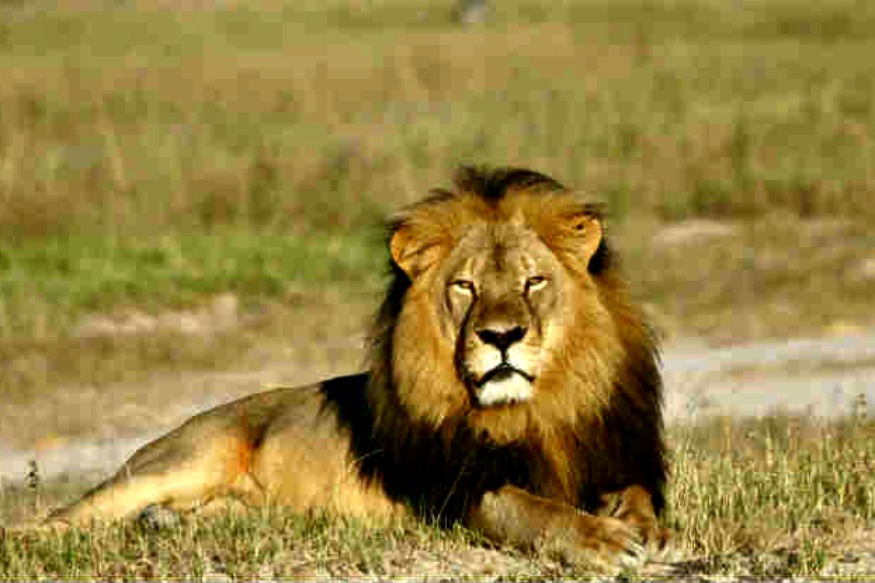
The Asiatic Lions live in the Gir forest, their only habitat in the world. Gir is the frontrunner when it comes to conservation efforts – numbers of the majestic beasts rose to 523 in 2015, a stupendous growth that brought them back from the brink of endangerment. This beautiful Gujarat forest is a must for the wildlife enthusiast as unlike other jungles, you are sure to spot the animal here.
gir
Food
Gujarati food is known across the world for its unique taste and its popularity among vegetarian foodies is staggering. Be it that dhokla sitting calmly on your plate or undhiyu which is a mixed vegetable dish turned on its head or the grand assortment of farsaan (or snacks) that your friends ask for whenever you visit that aunt in Amdavad, the food is just delicious.
Khandvi,_Gujarati_snack
Tourism
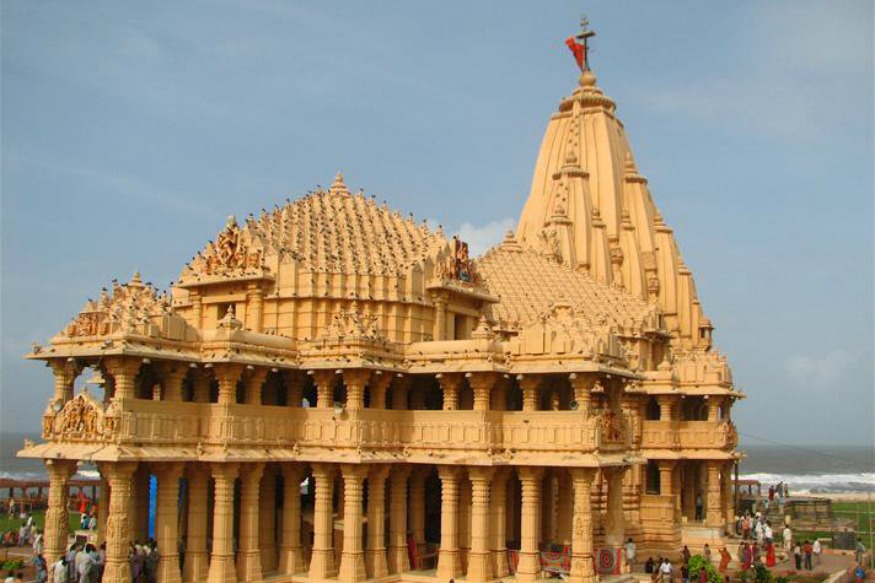
When Amitabh Bachchan asks you to spend a few days in a place, you spend a few days in that place. However, you can take your pick from a wide range of places - the hills of Saputara, Somnath Temple, the pristine beaches of Diu, the UNESCO heritage site Rani-Ni-Vav or the Sun temple at Modhera, Gujarat is teeming with places worth a dekko.
Somnath-current
Gujarat ka namak khaya hai!
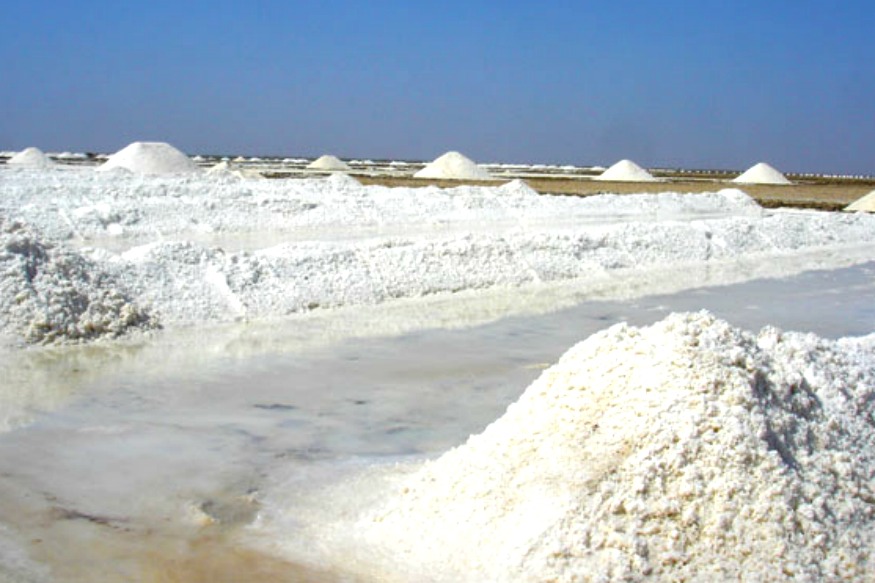
The state is the country’s largest producer of milk thanks to Amul. It is also provides more than half of the nation’s salt requirement.
salt
History galore
Mahatma Gandhi, Sardar Patel and the first Pakistani prime minister Mohammad Ali Jinnah, were all Gujaratis. Add historical sites like Dandi, Valsad, Sabarmati Ashram to the mix and it is a piece of our independence story packed in a single state.
charkha
Culture
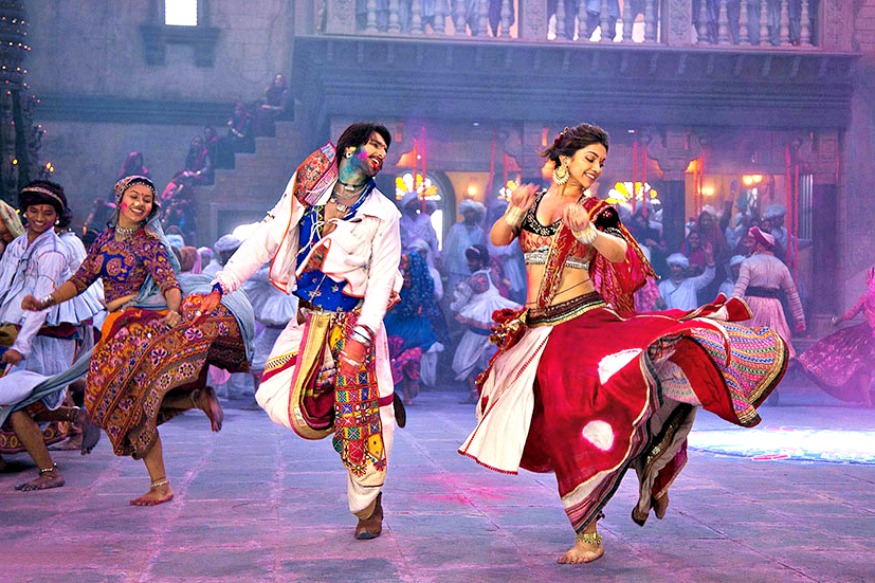
Who in the world doesn’t know how to bust a few Garba and Dandiya moves? Make that no one. The two most vibrant dances belong to this state. Ask a Patel living in any part of the world how they stay connected to their roots and pat comes the reply, ‘By doing Garba during Navratri.’
garba
Diamonds
Those diamonds that are your best friends? It is highly likely that it has been polished to perfection by an expert in Surat. Gujaratis are key players in the multi-billion dollar diamond export business globally. Almost 80% of the diamonds sold across the world have been polished in Surat. Infact, the city has a few dedicated colleges for teaching diamond technology.
diamonds
Varsities
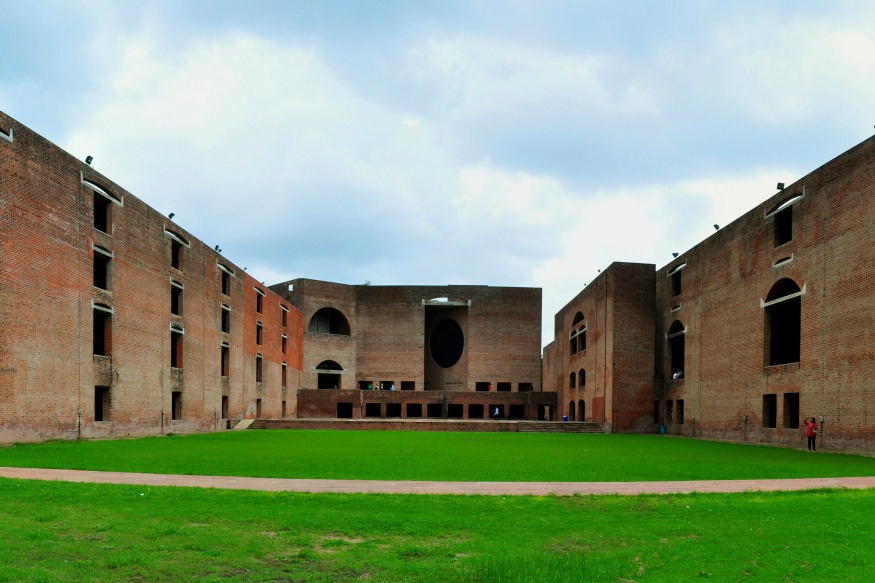
Be it the Maharaja Sayajirao University in Baroda or the National Institute of Design in Ahmedabad, some of the country’s best colleges are situated here. IIM-A, IIT, NIFT, CEPT, Nirma University are just some of the premier varsities that attract students from all parts of the country. No wonder, it is referred to as students’ paradise by many.
IIMA
TV Serials
Almost all the serials produced for television have a Gujarati connect. It began years back when Kyunki Saas Bhi Kabhi Bahu Thi was launched - the Virani khandaan changed how the urban Indian viewed TV's make-believe families. There are tons of serials that now take from the Gujarati culture and for some reason, the whole of India connects to them. Tarak Mehta anyone?
tarak mehta
Baniyas of our economy
It is no secret that the most successful businessmen of India are from Gujarat. Ambanis, Adanis etc are just some of the country's best 'baniya dimaags' that have done well globally. Call it the shrewd Gujarati mind when it comes to Mathematics or the level headedness of the many businessmen and entrepreneurs that are born here (namely, the Patels), Gujarat's people have always kept 'munafa' in mind.
Guru650

http://www.news18.com/news/buzz/gujarat-day-why-the-western-state-is-a-beautiful-jewel-in-indias-crown-1237243.html

Dogs vaccinated to save Etawah’s lions

A unique incident of Lion’s death in Gir jungle


May 06, 2016  
 Junagadh
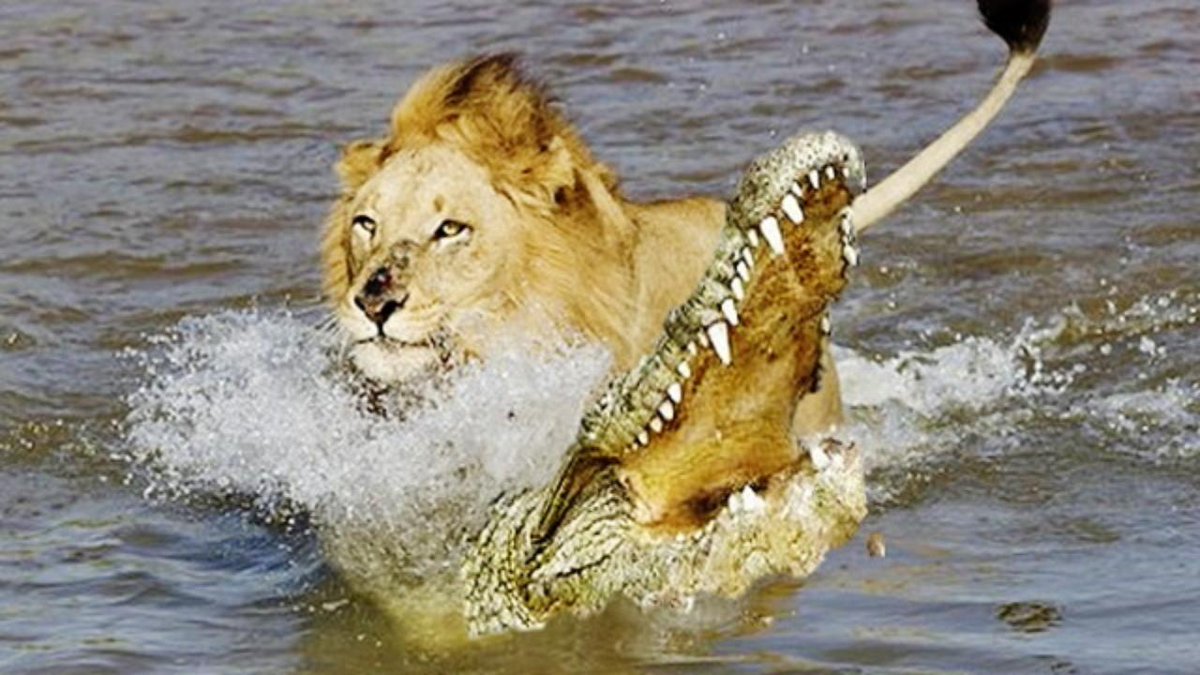
Two crocodiles attacked a lion and killed it in forest area of Dhari in Gir jungle of Gujarat.
The incident happened in Gir-East Hadala range near Dhudjinjva Nes. About three days back a lion living in this area reached Khodiar Ghuna to drink water. The water body has about 15-20 big size crocodiles due to which the Forest department has prohibited people to approach the water body.
A lion when reached Khodiyar Dhuna to drink water was attacked by 15-ft long crocodiles. One crocodile gripped a lion on frontal side which the other took its hold from the back side. After unsuccessful attempts to escape from grip, a lion was dead.
A local cattle rearer when saw a dead body of lion informed forest staff. Postmortem was conducted on the spot. 15 signs of crocodile teeth were found on lion’s dead body.

– DeshGujarat

http://deshgujarat.com/2016/05/06/a-unique-incident-of-lions-death-in-gir-jungle/