The
recent controversy over the shifting of mugger crocodiles from their
habitat near the Statue of Unity in Gujarat for tourist “safety,” has
generated controversy (Sinha 2019). It is not clear as to whether the
legal procedures under the provisions of the Wildlife (Protection) Act,
1972 were followed or not. However, the eagerness of the Gujarat
government to shift the crocodiles on the presumption that it will cause
danger to tourists, is to be contrasted with its vehement opposition to
the shifting of few endangered Asiatic lions from Gujarat to a proposed
second home in Kuno–Palpur Wildlife Sanctuary in Madhya Pradesh (MP).
The reluctance of Gujarat to part with Asiatic lions assumes a serious
dimension in view of the death of a sizeable number of lions due to the
outbreak of suspected canine distemper (Ghosal 2018).
Compounding the issue further is the fact that establishing the
second population of the Asiatic lion in MP is not just a policy
decision but a judicial direction in view of a specific Supreme Court
judgment (
Centre for Environmental Law, W W-F India v Union of India 2013)
which recognised the critical importance of establishing the second
population of Asiatic lion outside Gujarat. Though the Supreme Court
directed that the process of reintroduction of lions should be completed
within six months of the judgment, no concrete steps have been taken
till now. This article aims to identify the key reasons why the
reintroduction of Asiatic lion has failed to take off despite directions
from the highest court of the land. Specifically, the article examines
changes in conservation priorities with respect to the Asiatic lion in
the last few years and the impact it has on the reintroduction of the
Asiatic lion in MP.
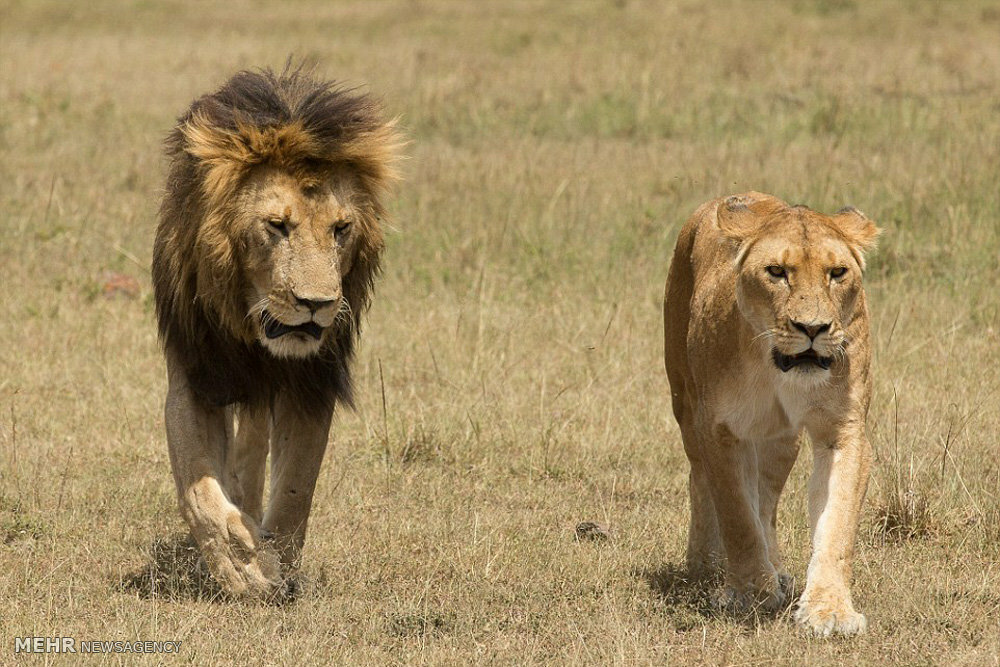
The Asiatic Lion (
Panthera leo persica) once had a fairly
large distribution and originated in East and South Africa and came into
India sometime between 2,000 and 3,000 years ago (Divyabhanusinh 2005).
Asiatic lions became restricted to the Gir forests of western India and
their numbers declined to around 50 individuals due to hunting and
habitat loss (Kinnear 1920; Fenton 1924). The Gir landscape in Gujarat
comprises about 9,000 square kilometres (km
2) of multiple land-use area composed of the 1,880-km
2 Gir Protected Area (Gir); the 180-km
2 Girnar Wildlife Sanctuary (Girnar); and approximately 7,000 km
2
of human-dominated agro-pastoral landscape of Amreli, Bhavnagar, and
Junagadh districts (Banerjee and Jhala 2012). Despite this geographical
spread, it is still regarded as a single population and this makes it
vulnerable to local extinction processes. In such a situation,
establishing other free-ranging populations geographically distant from
Gir is regarded as a conservation priority (Johnsingh et al 1998). It
has also been highlighted that although, currently, lions continue to
expand their range and density, it seems that in the future,
human-caused mortality is likely to increase due to enhanced human–lion
conflict and become a major concern for lion persistence in the Gir
landscape (Banerjee and Jhala 2012).
Necessity of a Second Habitat
In 1993, in a workshop held in Baroda, Gujarat focusing on concerns
surrounding the Asiatic lion (Zoo Outreach 1993), the necessity of a
second home for Asiatic lions was deliberated upon at length by
scientists of Wildlife Institute of India (WII) as well as officers of
the central and state governments. Three alternative sites for
reintroduction of Asiatic lions were suggested for an intensive survey.
The three sites identified were Darrah–Jawahar Sagar Wildlife Sanctuary
(Rajasthan), Sitamata Wildlife Sanctuary (Rajasthan) and Kuno Wildlife
Sanctuary (MP). After a detailed survey by the WII, Kuno Wildlife
Sanctuary was found to be the most suitable.
In order to implement the Lion Relocation project, a 20-year project
was conceived in three phases as follows: Phase 1 (1995–2000), village
relocation and habitat development; Phase 2 (2000–05), fencing at the
side, translocation, research and monitoring; Phase 3 (2005–15),
eco-development.
The implementation of the plan involved multiple actions. The problem
arose while implementing Phase 2, which involved the translocation of
the lion. Ironically, it was easier to relocate villages with tribal
populations, than to get the Government of Gujarat to part with a small
number of its lions to ensure the long-term survival of the population.
Thus, while 18 villages with more than 1,500 families gave up their
ancestral land to make way for the second home of the Asiatic lion, the
Gujarat government refused to part with even a single Asiatic lion, out
of its population of nearly 400. In 1996, the then minister for
environment and forests under the United Progressive Alliance
(UPA)–regime, wrote to the then Chief Minister Narendra Modi to part
with two lions for implementing Phase 2 of the project. Neither did the
Gujarat government respond to the request, nor did the Ministry of
Environment and Forests follow up on the issue.
1 A deadlock
was reached due to the apathy of both the central government under the
UPA and the state government under the Bharatiya Janata Party (BJP). The
fact that mp was under BJP rule further compounded the problem. The
political leadership in mp failed to take any concrete steps towards
insisting that, after having invested money and effort, the introduction
of the lion was critical for the success of the project. There were
other actors who remained silent spectators to the impending failure of
the lion relocation programme.
The first was the WII, which is India’s premier institution on
wildlife research and which conceptualised the lion relocation project.
Despite the fact that the project was not progressing as per the plan,
the WII did not aggressively push for implementation of the project.
This is understandable, given the fact that although it is an autonomous
institute, it still functions under the control of the Ministry of
Environment, Forest and Climate Change (MoEFCC), which had adopted a
soft approach towards the Government of Gujarat. The second category of
silent spectators was the Indian wildlife conservation groups.
Specifically, major conservation groups such as the World Wide Fund for
Nature (WWF), Bombay Natural History Society (BNHS), Wildlife
Conservation Society (WCS), Nature Conservation Foundation and Wildlife
Trust of India, among others, largely failed to articulate the
importance and urgency of the reintroduction of the lion despite serving
on the National Board for Wildlife, whose mandate is to advise the
government.
Supreme Court Judgment
The Supreme Court, in a landmark decision in 2013 (
Centre for Environmental Law v Union of India
2013), took a serious view of lack of implementation of the lion
relocation programme. This was in response to a public interest petition
filed by the Biodiversity Conservation Trust of India.
2 The
Court’s judgment was hailed as a significant step in recognition of the
fact that Gujarat is not the “owner” of the Asiatic lion and cannot have
a special right over the animal (Sinha 2013). Most importantly, for the
first time, the Supreme Court introduced many new concepts and
principles in Indian jurisprudence, such as the “species best interest
standard,” “eco-centric approach” and the necessity to view sustainable
development from the prism of interest of flora and fauna and not just
from the standpoint of human beings.
3 Specifically with respect to the concept of eco-centrism, the Supreme Court elaborated:
Eco-centrism is nature-centred, where humans are part of nature and
non-humans have intrinsic value. In other words, human interest does not
take automatic precedence and humans have obligations to non-humans
independently of human interest. Eco-centrism is, therefore,
life-centred, nature-centred where nature includes both humans and
non-humans. (
Centre for Environmental Law v Union of India 2013)
The principle of eco-centrism was relied upon by the Court in
highlighting the importance of protecting the Asiatic lion. According to
the Supreme Court:
We re-iterate that while examining the necessity of a second home for
the Asiatic lions, our approach should be eco-centric and not
anthropocentric and we must apply the species best interest standard,
that is the best interest of the Asiatic lions. We must focus our
attention to safeguard the interest of species, as species has equal
rights to exist on this earth. Asiatic Lion has become critically
endangered because of human intervention. (
Centre for Environmental Law v Union of India 2013)
The Court most significantly held that “No state, organisation or
person can claim ownership or possession over wild animals in the
forest.” This clarification was needed in view of the fact that Gujarat
had taken a view that lions are the property of the state and are the
“pride of the state.” The Court finally stated that the “MoEF’s decision
for reintroduction of Asiatic lion from Gir to Kuno is that of utmost
importance so as to preserve the Asiatic lion, an endangered species
which cannot be delayed” (
Centre for Environmental Law v Union of India 2013). The Court gave directions for the constitution of a multi-member expert committee
4 and that the order be carried out in its letter and spirit, within a period of six months from the date of judgment.
Post-judgment Developments
The Supreme Court gave a timeline of six months for the
implementation of the lion reintroduction programme. It has now been
nearly six years and nothing concrete has been done in order to
implement the orders of the Court. It is therefore imperative to trace
some of the key developments after 2013 and the impediments in the
reintroduction of lions in MP.
The Court had directed the Ministry of Environment and Forests to
constitute an expert committee. Subsequently, the expert committee was
formed by central government. The committee met for the first time in
July 2013. Despite the direction of the Supreme Court to implement the
project within six months of the judgment, all that the central
government did was constitute the committee. The lack of urgency can be
gauged from the fact that the committee met very infrequently: one in
2013, twice in 2014, and once in 2015 and 2016 each. If one examines the
minutes of the meetings, it becomes clear that no concrete action has
been undertaken to ensure the effective implementation of the direction
of the Court. For example, while in the first meeting in July 2013 it
was decided to prepare a reintroduction plan, the second meeting in 2014
was focused on how Gujarat has been successful in the conservation of
lions. Despite the fact that the prey density in Kuno had been
considered by the Supreme Court while directing for the relocation of
lion, in the fifth meeting held in 2016, it was decided to conduct
specific research “assessing habitat characteristics and quantifying
impacts of anthropogenic disturbances.” It was thus a clear instance of
duplication of work, where the committee took upon the task of
conducting research on Kuno Sanctuary and its viability, once again.
Nothing significant has happened so far, as far as efforts towards
the relocation of the lions are concerned after 2016. However, in 2017, a
significant policy change took place which clearly reveals that if
things continue as they presently are, the Asiatic lion reintroduction
plan is not likely to be ever implemented. This policy change was on
account of the new National Wildlife Action Plan, 2017–31 (MoEFCC 2017),
which replaced the earlier National Wildlife Action Plan, 2002–16
(MoEFCC 2002).
It is pertinent to point out that the National Wildlife Action Plan,
2002–16 that emphasised the need for an “alternative home” for species,
which included the Asiatic lion, formed the foundation of the Supreme
Court judgment directing the reintroduction of the lion in Kuno–Palpur
in MP. The plan notes:
The isolation of animal species due to fragmentation of habitats
reduces relict populations to unviable levels, leading to local
extinction. For highly endangered species like the Great Indian Bustard,
Bengal Florican, Asiatic Lion, Wild Buffalo, Dugong, the Manipur Brow
Antlered Deer and the like, alternative homes are imperative. (MoEFCC
2002)
The Supreme Court declared as illegal, the central government’s plan
for introduction of cheetahs from Namibia, and held that it is contrary
to the National Wildlife Action Plan, 2002–16. Since the action plan was
the basis of the Supreme Court judgment, the MoEFCC constituted a new
committee to frame the new action plan. The committee, headed by former
director general of forests, J C Kala, comprised of wildlife
conservationist Bibhab Talukdar (Aaranyak) and Vivek Menon (Wildlife
Trust of India), as well as the members of the standing committee of the
National Board for Wildlife.
What is deeply problematic with the new action plan is that it seems
to have been framed keeping the “emotional” interest of Gujarat in mind.
This is evident from the fact that the new National Wildlife Action
Plan has deleted all references to the Asiatic lion. The new action plan
has removed the Asiatic lion from the list of animals that require
alternative homes. This is despite the fact that the threat to the
Asiatic lion and its habitat is far from over. In addition to the threat
of epidemic, the Asiatic lion faces even greater habitat-related
threats. Writing on the threat to the lions, H S Singh (2017), member of
the National Board for Wildlife stressed:
Development of industries and ports, mining activities, rails and
high-speed roads in the coastal area have already impacted the lions.
The increased frequency and speed of goods trains in Pivavav–Rajula line
has posed a new threat as ten lions were killed during 2013–15
(source–Forest Department). Industries and mining activities around
Veraval coast have forced the lions to leave the area. Pipavav port and
new port activities near Kaj wetlands in Kodinar taluka cause
disturbance to a group of lions settled there. The change in land-use
pattern and disappearance of wastelands and community lands are other
issues.
The National Wildlife Action Plan now no longer emphasises the need
for an alternative home for the Asiatic lion. Most importantly, while
the Asiatic lion finds no mention at all in the National Action Plan,
the introduction of cheetah has found specific mention in the action
plan. It mentions that an expert committee has been set up by the
government for the introduction of the African cheetah into India
notwithstanding the fact that the Supreme Court had declared the
introduction of the cheetah as illegal. The judgment and directions of
the Court are thus sought to be overruled not through a statutory law
passed by the legislature, but through an action plan. This blatant
non-compliance to the directions of the Court not only has serious
implications for wildlife conservation but also undermines the authority
of the Supreme Court. After all, a small group of wildlife
conservationists and organisations, selected by the government, framed a
policy/action plan which is completely opposed to the “species best
interest standard” and places the parochial interest of the state above
all. It is surprising that the removal of the Asiatic lion from the
national action plan has not met with any objection from
conservationists across the country.
Conclusions
The Asiatic lion relocation case shows how regional sentiments take
precedence over science as well as rule of law. The relocation of the
Asiatic lion from Gujarat is a conservation necessity in order to ensure
the long-term security for the only lion population outside Africa.
This necessity led the Supreme Court to pass a landmark judgment which
prioritised wildlife conservation over narrow parochial interests
through the “species best interest standard” and the necessity of having
a “nature-centred” approach as opposed to a “human-centred” approach.
The Supreme Court’s decision in the lion relocation case was not just a
landmark decision because it gave wildlife conservation the importance
it deserves, but more importantly because it dealt with an issue that
had reached a political deadlock due to the reluctance of Gujarat to
part with its lions. However, subsequent developments, especially after
2014, show that the changed political leadership at the national level
has led the central government to support Gujarat’s reluctance to part
with the lions. The fact that prominent wildlife conservationists were
party to this decision and the silence of conservation organisations
does not augur well for the future of the Asiatic lion. In fact, despite
the Supreme Court’s categorical conclusion that the lion is not the
property of the state, H S Singh (2017), member of the National Board
for Wildlife wrote that the “Gir lion is the pride of Gujarat, and the
local people own these lions and feel proud of the only ownership in the
world.”
It is this approach, even by members of statutory bodies, which has
made it impossible to implement the judgment of the Court in letter and
spirit. Instead of bureaucratic red tape—which is generally resorted to
in order to circumvent Court directions—in the lion relocation issue, it
is a mix of science and policy which had led to blatant non-compliance
with the judgment. The recent epidemic which led to the death of nearly
28 lions could have served as a wake-up call to ensure that the
relocation efforts are revived. Nothing of this sort seems to have
happened. On the contrary, the National Tiger Conservation Authority, a
statutory authority with the mandate to protect tigers and their
habitat, has approached the Supreme Court to seek permission to revive
the African cheetah reintroduction programme in India. The plans for
introduction of African cheetah, if approved, would mean that the
Asiatic lion—which had earlier lost its position of supremacy to the
tiger in 1972 when the tiger replaced the lion as India’s national
animal—will be overshadowed by the African cheetah in the race to find a
second home. The Asiatic lion will thus remain vulnerable to both the
loss of habitat and the threat of epidemic.
The lion relocation case is a testimony to the ability of the
government to circumvent the mandatory directions of the Court through
innovative use of committees and policy changes. The constitutional
means to overrule a judgment of the Court is to pass legislation to that
effect. However, the process is cumbersome and controversial, and
attracts public attention, which would lead to opposition. On the other
hand, by creatively working with expert committees, hand-picked experts,
and non-governmental organisations aligned with the government’s
policies, the government is able to circumvent the mandatory directions
of the highest court of the land. The failure of the Asiatic lion
reintroduction is therefore not just an issue of conservation but rather
an instance of failure of rule of law and the triumph of regional
parochial interest over science.
Notes
1 This fact is part of the judgment of the Supreme Court in
Centre for Environmental Law, WWF v Union of India, 2013.
2 The Biodiversity Conservation Trust (BCTI) filed an intervention application in a writ petition titled
Centre for Environmental Law v Union of India WP(C) No 337 of 1995. The
intervention application was numbered as IA 100. Thus, even though the
title of the case is Centre for Environmental Law, WWF India, in
actuality, the Centre for Environmental Law, WWF was in no way connected
to the litigation in the Supreme Court.
3 Despite the strong judicial pronouncement highlighting these
principles, the courts in India, including the Supreme Court, have not
relied on these principles unlike other environmental law principles
such as precautionary principle and polluter pay principle.
4 The Supreme Court directed that the MoEF has to constitute an
expert committee consisting of senior officials of the MoEF, chief
wildlife wardens of Madhya Pradesh and Gujarat, the secretary general
and chief executive officer of the WWFY S Jhala, senior scientist with
Wildlife Institute of India Ravi Chellam, and senior scientist A J T
Johnsingh,
References
Banerjee, Kausik and Yadvendradev V Jhala (2012): “Demographic Parameters of Endangered Asiatic Lions (
Pantheraleopersica) in Gir Forests, India,”
Journal of Mammalogy, Vol 93, No 6, pp 1420–30,
https://doi.org/10.1644/11-MAMM-A-231.1.
Centre for Environmental Law, WWF-India v Union of India (2013): SCC, SC, 8, p 234.
Divyabhanusinh, C (2005):
The Story of Asia’s Lions, Mumbai: Marg Publication.
Fenton, L L (1924):
The Rifle in India: Being the Sporting Experiences of an Indian Officer, London, United Kingdom: Thacker and Co.
Ghosal, Aniruddha (2018): “Another Lion Dies in Gir Forest, Death Toll Now 24,”
News18,
15 October, viewed on 7 April 2019,
https://www.news18.com/news/india/another-lion-dies-in-gir-forest-death-toll-now-24-1909583.html.
Johnsingh, A J T, R Chellam and D Sharma (1998): “Prospects for Conservation of Asiatic Lions in India”
Biosphere Conservation, Vol 1, No 2, pp 88–89.
Kinnear, N B (1920): “The Past and Present Distribution of the Lion in South Eastern Asia,”
Journal of the Bombay Natural History Society, Vol 27, pp 34–39.
MoEFCC (2002): “National Wildlife Action Plan, 2002–2016,” Ministry
of Environment, Forest and Climate Change, Government of India.
— (2017): “National Wildlife Action Plan, 2017–2031,” Ministry of Environment, Forest and
Climate Change, Government of India,
http://www.moef.gov.in/sites/default/files/NWAP-2017-2031.pdf.
Singh, H S (2017): “Dispersion of the Asiatic Lion
Pantheraleopersica and Its Survival in Human-Dominated Landscape outside the Gir Forest, Gujarat, India,”
Current Science, Vol 112, No 5, pp 933–40.
Sinha, Neha (2013): “The Lion Is an Indian, Not a Gujarati,”
Hindu, 7 May, viewed on 7 April 2019,
https://www.thehindu.com/opinion/op-ed/the-lion-is-an-indian-not-a-gujarati/article4689839.ece
— (2019): “Not Even Crocodile Tears for Gujarat’s Muggers,”
Economic & Political Weekly, Vol 54, No 6, p 2,
https://www.epw.in/journal/2019/
6/postscript/not-even-crocodile-tears-gujarats.html.
Zoo Outreach (1993): “The Asiatic Lion (Panthera leo persica) PHVA
held at Sayaji Baug Zoo, Baroda, Gujarat 18–21 October 1993,” Executive
Summary, viewed on 7 April 2019,
www.zooreach.org/downloads/ZOO_CAMP_PHVA_reports/1993%20The%20Asiatic%20lion%20PHVA%20executive%20summary.pdf.

 Photo: Getty Images