English language news articles from year 2007 plus find out everything about Asiatic Lion and Gir Forest. Latest News, Useful Articles, Links, Photos, Video Clips and Gujarati News of Gir Wildlife Sanctuary (Geer / Gir Forest - Home of Critically Endangered Species Asiatic Lion; Gir Lion; Panthera Leo Persica ; Indian Lion (Local Name 'SAVAJ' / 'SINH' / 'VANRAJ') located in South-Western Gujarat, State of INDIA), Big Cats, Wildlife, Conservation and Environment.
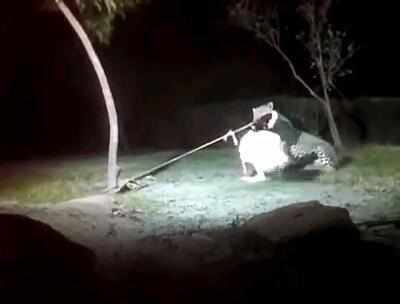
Goat attacked by the leopard in the nightRAJKOT: A video of an illegal leopard show went viral on social media on Thursday where a leopard is seen attacking a goat tied to a tree in the night. The video is suspected to have been shot in forest area of Gir Somnath district. The forest department has initiated a probe into the video. The
video shows a goat being left in the forest area tied to a tree. After
few minuted a leopard is seen rushing towards the goat from the dark and
catching it by the neck. Forest
officials said that the usually goats are not left tied to a tree in
the forest. They said that the goat could have been tied as a bait for
the lion but the leopard got to it first, it appears. When contacted chief conservator of forest (wildlife
circle) D T Vasavda said, “We are not certain about the location of
this video. I have asked my staff to verify the content and give a
report on it. Primarily it seems that the video has been edited before
posting it on the social media.” https://timesofindia.indiatimes.com/city/rajkot/after-illegal-lion-shows-its-time-for-leopard-show/articleshow/70079457.cms
Beautiful names chosen by the public for Fota's new lion cubs
Gráinne McGuinness
After much deliberation, Fota Wildlife has decided on the names for four of its newest arrivals.
The four endangered Asian lion cubs, who were born at the park in February, are to be called Ri, Riann, Rani and Ravi.
In
April, the park announced a naming competition for the cubs and
choosing the winners was a tough task for the rangers, who had to sift
through hundreds of suggested names.
The beautiful alliterative
names came from winners Ian Twohig and Emma McCarthy, both from Cork,
Helen Cronin from Macroom, and Pamela Kent-Ryan from Mitchelstown.
The four will each receive a Conservation Annual Pass to Fota Wildlife Park.
Pic Darragh Kane
The Asian lion cubs are now more than four months old and join their
mother and father, Gira and Shanto, along with their older brother Loki,
and aunt Gita in the specially constructed lion habitat in the Asian
Sanctuary in Fota Wildlife Park. “The pride is doing great,
the cubs are growing and gaining strength daily and Loki is proving to
be a fantastic big brother as he is great with the cubs,” Kelly Lambe,
Lead Ranger said. “All the adults are getting along really well together
and each one interacts with the cubs positively, you see them learning
to hunt by playing with the others.
“They are still having the odd suckle from Mum Gira, but they are also eating meat with gusto.”
Pic Darragh Kane
Loki’s
two sisters, Arya and Amira, part of the first lion cub pride to be
born at Fota, were recently transferred to Helsinki Zoo as part of the
European Endangered Species Breeding Programme (EEP) for Asian lions.
“We
are also delighted to report that the two girls, Arya and Amira have
settled in well in Helsinki with their grandmother,” Ms Lambe added.
The
Asian Lion is classified as endangered and now inhabits only one
remaining site in the world – the Gir Forest in India. This means that
wildlife parks and zoos play a crucial role in safeguarding the species.
The current population in the Gir Forest is estimated to be in the
region of 500 lions.
Their limited distribution increases the
species susceptibility to extinction as a result of disease or a
possible natural disaster. It also highlights the importance of
cooperative breeding programmes undertaken by zoological collections
such as Fota Wildlife Park acting as a backstop to the extinction of
these endangered species.
Pic Darragh Kane
Fota
Wildlife Park opened the Asian Sanctuary in 2015, and it is now home to
some of Asia's most endangered species such as the Indian rhino, the
Sumatran tiger and the Asian lion. Fota Wildlife Park’s core values of
conservation, education, and research have been instrumental in
fostering greater public understanding of the threats to the
biodiversity of animal and plant habitats; as well as maintaining some
of the world’s most endangered species. https://www.echolive.ie/corknews/Beautiful-names-chosen-by-the-public-for-Fotas-new-lion-cubs--e7ad9175-6ae8-431b-a937-b6436b90c663-ds
The international agreement known as CITES seeks to protect wildlife threatened by trade. By Rachel Fobar
PUBLISHED
What is CITES?
The Convention on International Trade in Endangered Species of Wild
Fauna and Flora, often referred to as CITES (SIGH-teez), is an agreement
between governments that regulates the international trade of wildlife
and wildlife products—everything from live animals and plants to food,
leather goods, and trinkets. It came into force in 1975 with the goal of
ensuring that international trade does not threaten the survival of
wild plants and animals.
There are about 5,800 species of animals and 30,000 species of plants
protected by CITES currently. They’re categorized into one of three
appendices, depending on how at risk from trade they are.
As of June 2019, CITES had 183 party governments, which must abide by CITES regulations by implementing legislation within their own borders to enforce those regulations.
CITES was first conceived of at a 1963 meeting of the International
Union for the Conservation of Nature (IUCN), the global authority on the
conservation status of wild animals and plants.
Appendix I includes species that are in danger of extinction because
of international trade. Permits are required for import and export, and
trade for commercial purposes is prohibited. Trade may be allowed for
research or law enforcement purposes, among a few other limited reasons,
but first the source country must confirm that taking that plant or
animal won’t hurt the species’ chance of survival. (This is known as a
“non-detriment finding.”) TheAsiatic lion and tigers are two species listed as Appendix I.
Appendix II includes species that aren’t facing imminent extinction
but need monitoring to ensure that trade doesn’t become a threat. Export
is allowed if the plant, animal, or related product was obtained
legally and if harvesting it won’t hurt the species’ chance of survival.
American alligators
are listed on Appendix II, for example. They were overhunted through
the 1960s for their skin, but their numbers are now on the rise. CITES
Appendix II listing helps ensure the alligator skin trade doesn’t become
a threat again.
Appendix III includes species that are protected in at least one
country, when that country asks others for help in regulating the trade.
Regulations for these species vary, but typically the country that
requested the listing can issue export permits, and export from other
countries requires a certificate of origin. While honey badgers are listed as of least concern
by the IUCN, their Botswana population is on CITES Appendix III because
of concerns that they would be exploited in other African countries for
use in traditional medicine and as bushmeat.
What happens at CITES meetings?
Every two to three years,
CITES parties meet at what’s called the Conference of the Parties (or
“CoP”) to evaluate how the convention is being enforced. The purpose of
this two-week meeting is to consider new proposals for listing or
removing species from appendices, to debate other decisions and
resolutions about implementation of regulations, and to review
conservation progress.
Appendix changes, the main event at the CoP, are proposed if a
species is thought to need more—or less—protection from trade. For
example, in 2016, the proposal to increase protections for pangolins, scaly, armadillo-lookalikes that are among the world’s most trafficked mammals, by moving them from Appendix II to Appendix I passed almost unanimously.
Police Raid What is Possibly Europe's Largest Illegal Turtle FarmOfficials
seized more 1,100 turtles and tortoises from an alleged illegal
hatchery on the Spanish island of Majorca in 2018. Some of the species
found are prohibited from international commercial trade under CITES. Read the story here.
How effective is CITES?
CITES has plenty of critics.
Some say conservationists flock to the two-week meeting every few
years, fiercely debate the fate of endangered animals, and then go home,
patting themselves on the back for a job well done. Meanwhile, the
actual enforcement of the CITES regulations is left to the countries
themselves—some of which don’t have the resources or political will to
enforce regulations.
A 2019 analysis in the journal Science
found that in nearly two-thirds of cases, CITES protections lag after a
species is determined to be threatened by international trade. For
example, while pangolins were finally added to Appendix I in 2017, an
estimated million were trafficked between 2000 and 2013. Of the eight
species of pangolins, half are endangered or critically endangered. The
vast majority of animals that are in the wildlife trade are not protected by CITES.
If a party violates the convention, CITES can respond with sanctions,
which prevent a country from trading in CITES-listed species. But
countries are rarely sanctioned
and the process can become highly politicized. What’s more, because
CITES membership is voluntary, a country could simply leave CITES rather
than accept sanctions.
Still, some say regulations are an important first step. Before CITES existed, international wildlife trade was largely a free-for-all—while
individual countries tried to restrict the trade of threatened species,
illegally exported products could be legally imported into many
countries.
One success story CITES touts is the vicuña. In the mid-20th century, populations of the once-abundant llama relative had dwindled to about 10,000 animals
because commercial demand for its fur led to widespread poaching. But
after enacting conservation measures, including a CITES listing in 1975,
populations rebounded. Today, the vicuña’s conservation status is least concern.
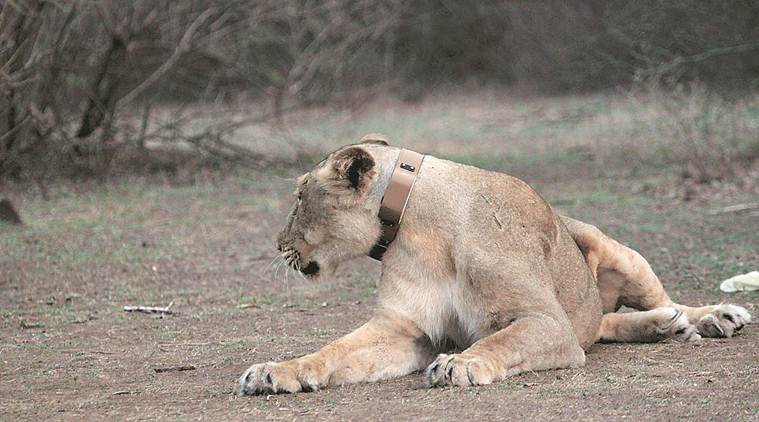
Written by Gopal Kateshiya, Avinash Nair | Ahmedabad/rajkot | Updated: July 4, 2019 1:44:04 pmA radio collar clamped around the neck of an Asiatic lion in Gir forest. (Gujarat Forest Department)
Illness among lions also accounted for 45% of the 145 lion cub deaths between 2013-18
As many as 413 Asiatic lions died in the past five years in Gujarat’s
Gir forest and other protected areas, the last abode of the endangered
big cats in the world. Over 35 per cent of deaths were due to “illness”,
the Gujarat Assembly was told.
Even as the forest department is trying to radio-collar lions to
prevent deaths caused by conflict with human habitation, 70-odd lions
died after they either fell into wells built without parapet walls, were
run over by trains or were electrocuted on farm fences.
Of the 413 lions that perished between 2013 and 2018, 132 were
females, 119 males and 154 cubs. The highest number of deaths, 98, was
recorded in 2016-17, government data tabled on Tuesday as a written
reply to an unstarred question posed by Congress MLA from Talala,
Bhag-abhai Barad, showed. Incidentally, Barad was disqualified as an MLA
in March this year after a trial court convicted him in a 24-year-old
illegal mining case.
Of 413 lion deaths during the five-year period, 35 per cent or 146
adult lions, and 45 per cent, or 69 of 154 cubs, also died of illnesses.
While the number of deaths among cubs seem unusually high, forest
officers denied it, saying survival rates among cubs are generally low.
In September last year, 23 lions died within just two weeks in
Dalkhaniya range of Gir (east) forest division in Amreli district.
Laboratory tests confirmed that 18 of them died after contracting the
deadly canine distemper virus (CDV) and bacterial infections such as
Babesiosis and Gram-negative Bacilli. Consequently, the forest
department rescued 33 lions and shifted them to animal care centres, and
21 tested positive for CDV. All 33 big cats were administered the CDV
vaccine, and though they have been reportedly cured, they are still in
captivity. The toll climbed even higher by October-end last year.
However, these figures pertaining to the year 2018-19 are not part of
the tabled data.
Apart from disease, 44 lions also died of old age, and 153 lions died due to unspecified “other natural reasons” as well.
Additionally, 70-odd lions died due to unnatural causes such as
falling into open wells, being run over by trains or being electrocuted
on agricultural farms. Of them, 20 big cats died after falling into
wells, and four were run over by trains. In 46 deaths, the cause was
recorded as “other unnatural reasons,” the reply stated.
In June 2015, as many as 11 Asiatic lions died in flash floods in Amreli and Bhavnagar districts.
Dushyant Vasavada, Chief Conservator of Forests of the Junagadh
Wildlife Circle, which has jurisdiction over much of the lion landscape
that comprises Gir forest and other protected areas spread across
Junagadh, Amreli, Gir Somnath and Bhavnagar districts in Saurashtra
region of the state, told The Indian Express
that even death due to old age can be attributed to various factors.
“You will have to study each and every reason, such as age, sex etc
before you come to a conclusion,” he said. He claimed that the number of
deaths during the period was normal. “Every year, around 90 lion deaths
are recorded. At this rate, 413 in five years is not too high,” he
said.
According to a 2015 census, there are just 523 Asiatic lions in
Gujarat, and the species is categorised as endangered by The
International Union for Conservation of Nature, a global authority on
the status of the natural world.
Conservation efforts have ensured a steady growth in the population
in the past four decades. In order to protect lions and to study their
movement patterns and habitat preferences, the forest department has
begun radio-collaring them.
Of the population of 523 lions, an estimated 167, or 32 per cent,
live outside protected forest areas. This has caused a rapid rise in
conflict with humans. Data tabled in the state legislature on Tuesday
showed that over 50 humans have been killed and 436 injured in attacks
by either lions or leopards in Gir-Somnath, Junagadh and Amreli, between
December 2013 to November 2018.
https://indianexpress.com/article/cities/ahmedabad/gujarat-413-lions-died-in-5-years-35-from-illness-17-in-conflict-5813921/
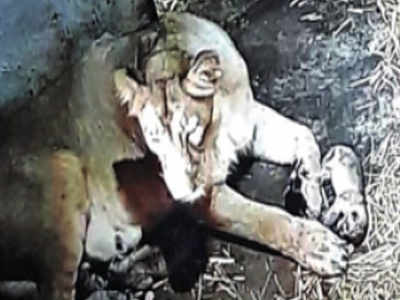
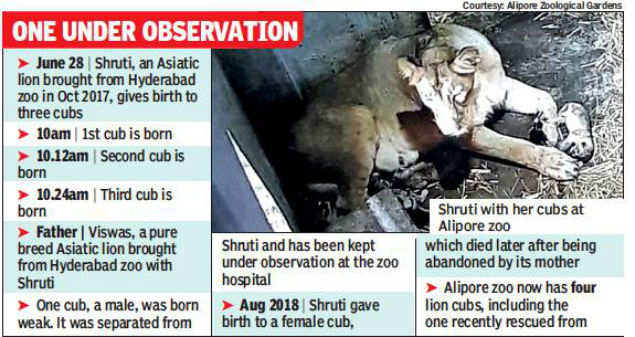
Shruti with her cubs at Alipore zooKOLKATA: Three lion cubs were born at the Zoological Garden, Alipore,
on June 28 to six-year-old Shruti, a pure-breed Asiatic lion brought
from the Hyderabad zoo in October 2017. The cubs’ father, Viswas — a
12-year-old Asiatic lion — was brought with Shruti from the same zoo. Shruti
had given birth to a cub last August. But the cub later died after
being abandoned by its mother. That was the first time that a lion cub
was born at the Alipore zoo since 1992.
Speaking
about the triplets, member secretary of the state zoo authority V K
Yadav told TOI, “The first cub was delivered around 10am. The second was
born around 10.12am and the third after about 12 more minutes.” Alipore
zoo director Asish Kumar Samanta said the cubs were fine. “The
last-born cub is a little weak and has been kept under observation,” he
said. The weak cub was separated from its mother on Monday. “It’s a
male. This cub fed properly on June 28 and 29, but stopped taking its
mother’s milk from the second half of next day. We separated it from
Shruti on Monday and brought it to the zoo hospital. We are offering it
baby food with colostrum, the first form of milk produced by the mammary
glands of mammals after delivery,” Yadav said. Last year, a female
cub was born to Viswas and Shruti in August. But Shruti had abandoned it
after keeping it with her for only about 48 hours. “At the time of
birth, the cub weighed hardly 600g. It should have weighed at least
1.5kg. The cub couldn’t even drink its mother’s milk. Shruti abandoned
the cub on the third day. We had separated it from the mother and tried
to feed it glucose water and baby food. But that can’t replace mother’s
milk. The cub died soon after,” a zoo official said. The zoo now has four lion cubs, including the one rescued recently from Belghoria Expressway
while being smuggled out of the state. Though it’s not yet clear
whether it’s an Asiatic lion or an African one, zoo officials have made
arrangements with the help of Zoological Survey of India to find out its
origin. “ZSI scientists have collected its DNA samples and we are waiting for the final report,” an official said. On
Shruti’s cubs, though, a senior official said that they were keeping
their fingers crossed. “The cubs are now four days old and so far they
are doing well. Shruti is guarding her cubs and not letting the keepers
in. We are monitoring them and their mother 24×7 on CCTVs,” the official
added. https://timesofindia.indiatimes.com/city/kolkata/alipore-zoo-welcomes-three-lion-cubs/articleshow/70032216.cms
AHMEDABAD:
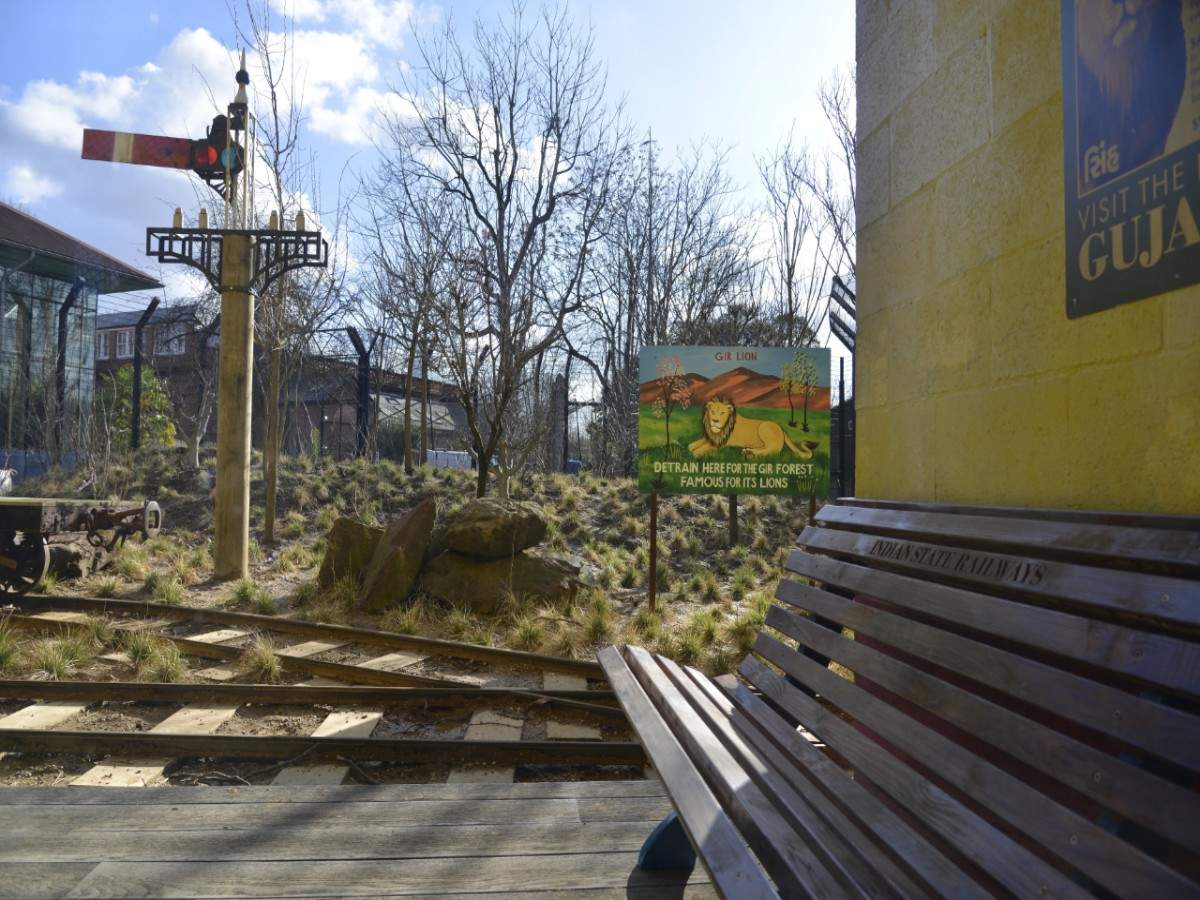
A large stone-walled entrance with the words ‘Land of the Lions’
inscribed on it, a train station, a crumbling temple clearing, a high
street and a guard hut, all these give you a glimpse of Gujarat’s Sasan
Gir at ZSL London Zoo, one of the world’s oldest zoos which houses five Asiatic lions. “Land
of the Lions is home to ZSL London Zoo’s pride of Asiatic lions —
Bhanu, Heidi, Indi and Rubi — and tells the story of this critically
endangered species, which is only found in one small area of India – the
Gir Forest region,” says Emma Edwards, head of content and
communications, Zoological Society of London (ZSL) that has developed the zoo. The
different areas of the 2,500 square metres exhibit are all inspired by
their real counterparts in the Gir forest and nearby villages. For
instance, the vibrant high street in the exhibit is modelled on the
bustling village of Sasan Gir and the Maldhari community that lives so
closely alongside the lions.
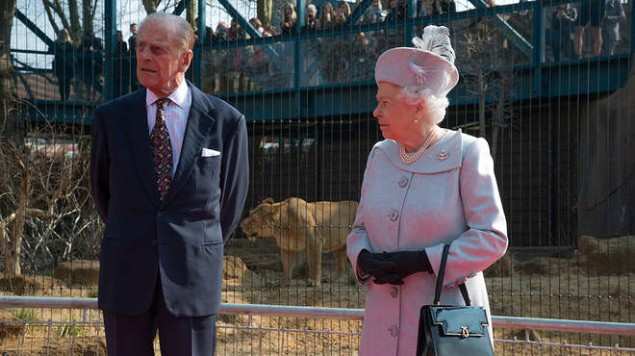
The
Land of Lions was opened by Queen Elizabeth II in 2016. Since then,
more than £3.6m have been garnered from scores of visitors. Land of
the Lions shows how the people of Gujarat are striving to conserve the
rare cat and how ZSL is working with government institutions in India to
protect this incredible species, including providing training on patrol
monitoring and veterinary care. The success story of Asiatic lions
in Gir has become a model of conservation, with constant patrols against
poachers. The protected area of Asiatic lions is spread over 1,452 sq
km and includes five regions, including the Gir National Park, the Gir
sanctuary, Matiyana and Paniya. About half of the population is outside
the protected areas, closer to human settlements.
“Protected
by law, the lions play an important role in the local community who
deeply value the presence of the big cats. But due to their limited
range, this population of approximately 600 are at threat from disease
outbreak and conflict with humans in villages less comfortable with
their presence,” according to Edwards. ZSL London Zoo’s designers
visited the lions’ wild home in Gujarat for inspiration and ideas and
worked with members of the community there, and with London’s Gujarati
community, to ensure the exhibit could be true to the India they know.
“Railway
tracks cross the lion paddock, exactly as the train tracks cut through
the Gir forest and the trains are often halted by lions ahead!” “Every corner of our exhibit was inspired by the real Land of the Lions: The Gir Forest National Park
and Wildlife Sanctuary. Even the sounds heard around Land of the Lions
are true to life. During our visit to India we recorded soundscapes of
street and forest life in Gujarat to ground Land of the Lions in
reality,” she says. Rickshaws, bicycles, sacks of spices, maps,
rangers’ huts, and even a life-size truck – including lots of items
sourced and shipped from India – help to create a vibrant and exciting
space, both inside and out of the lions’ domain, highlighting the unique
proximity in which Asiatic lions live alongside people in their native
Indian habitat. Providing cover to the pride There
are more than 442 shrubs, 47 trees, and 46 species of plants — all of
which provide cover to the pride to practise their hunting skills — deep
shade for sunny days and full sunlight for basking. There are multiple
high vantage points, which the big cats like to lie on to survey their
territory, spread over two different paddocks, alongside a range of
indoor and outdoor dens for the pride.
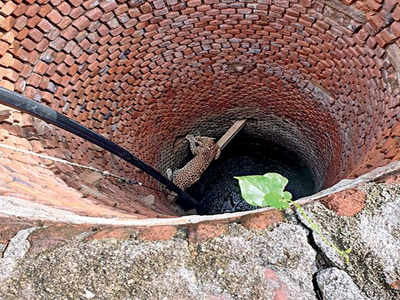
Leopard being rescued from a well in Mekda village of AmreliRAJKOT: Three incidents of leopards falling into wells were reported from Amreli and Gir-Somnath districts on Sunday. In
Mithapur village of Veraval taluka in Gir-Somnath district, a male and
female leopard fell into the well while mating, sources said. The
four-year-old male leopard died while the female was rescued. “We managed to rescue the three-year-old female leopard by lowering a cot into the well and lifting the big cat
up. The rescued leopard has been taken to Amarapura animal care
centre,” said an official from the forest department of Veraval range. Meanwhile,
in Menkda village of Savarkundla taluka, a leopard that had fallen into
an open well was rescued by the forest department team. “The leopard
seems to have fallen into the well while chasing a prey. We had to shoot
it with a tranquillizing dart to render it unconscious in order to
rescue it from the well,” said a forester. https://timesofindia.indiatimes.com/city/rajkot/saurashtra-reels-under-wet-spell-many-rivers-in-spate/articleshow/69998277.cms
Having recovered after nine months in quarantine at Jasadhar animal
care centre and Devaliya interpretation zone at Junagarh, the big cats
are roaring to go free.
IndiaUpdated: Jul 01, 2019 08:14 IST
The state forest department is now charting out a
plan to use these lions for gene pool research, breeding, and animal
exchange programmes between zoos.(REUTERS FILE PHOTO)Hiral Dave Hindustan Times, Ahmedabad
Thirty-three Asiatic lions, who were affected but survived the
outbreak of canine distemper virus (CDV) in the Gir national park and
wildlife sanctuary last October, have been left permanently vulnerable
to the deadly virus and will not be reintroduced to their natural
habitat for the rest of their lives, according to Gujarat forest
department officials.
Having recovered after nine months in
quarantine at Jasadhar animal care centre and Devaliya interpretation
zone at Junagarh, the big cats are roaring to go free. But none of them
will be allowed to return to the forest because of the danger the virus
poses to them and to about 600 other lions in the sanctuary if
intermingling is permitted, the officials said.
The state forest
department is now charting out a plan to use these lions for gene pool
research, breeding, and animal exchange programmes between zoos.
“A
course comprising three cycles of vaccination has been completed. All
the big cats are now virus-free and fit,” said chief conservator of
forest Dushyant Vasavda.
But various issues -- lower immunity to
this contagious gastrointestinal and respiratory ailment, possible
territorial fights on reintroduction in the wild, and reduced hunting
capabilities -- have led the experts to keep the lions from roaming free
in the wild.
“All the 33 lions that were quarantined for the CDV
treatment will now remain in permanent captivity,” said MM Sharma,
principal chief conservator of forest (wildlife).
“As these 33
lions have been affected once, not only are they vulnerable to the
diseases but their presence can possibly put the lives of other big cats
in danger if they catch CDV again. Besides, as lion is a territorial
animal, their reintroduction to the wild would lead to infighting as
their previous territories have been claimed by other prides,” he told
HT.
In 2018, 25 Gir lions died in territorial fights.
Earlier
found in several parts of the Asian continent, since the beginning of
the 20th century, Gir has become the last abode for the Asiatic lion.The
33 affected lions were rescued from Dalkhaniya Range (Amreli district)
in Gir east. The forest is divided into two administrative parts – east
and west.
At the end of nearly nine months of captivity and
treatment, doubts have also been raised on their hunting capacity,
raising the risk of the big cats feeding on easily available but
possibly contaminated food. The chances of them turning into maneaters
have also not been ruled out.
Spread across 1400 sq km, the Gir
national park and wildlife sanctuary is now filled to the brim. As per
the state government’s latest estimate, the forest is home to about 600
lions, despite the death of 204 lions in 2017 and 2018. As per the last
census in 2015, Gir had 523 lions.
In the 1990s, CDV killed around
1,000 lions in the African country of Tanzania. So it was no surprise
that the CDV deaths in Dalkhania range worried the state forest
department . The entire Gir forest area was scanned, and 33 lions from
Dalkhania range were quarantined to be administered anti-CDV
vaccination.
Seventeen lions died due to CDV in September-October
2018. The forest department reported that three lions died in the same
period due to infighting, whereas the cause of three other deaths could
not be ascertained.
Local environment activists criticise the
forest department’s move of preventive anti-CDV vaccination for the 33
lions. “We feel the decision for CDV vaccination was taken in haste and
showed inexperience. If it was only a precautionary move, then isolation
for a short period and release in the wild at the earliest would have
been a better solution. Three cycles of vaccination prolonged the lions’
isolation,” said, Razak Bloch, convener of Gujarat State Environment
Conservation Committee.
Sharma, however, says it’s an opportunity
to include some the 33 lions in the gene pool project “started to boost
the genetic diversity of the Asiatic lions”. “Besides, Gujarat has never
been able to meet the demand of exchange programme for lions with other
state zoos. This will help us strengthen the exchange programme,” he
said.
Anish Andheria, president of the Wildlife Conservation
Trust, said that the decision of the Gujarat forest department made
sense. “These lions have spent months in captivity and therefore, their
healthy release in the wild is an almost impossible task. Moreover, Gir
has a good population of lions and the lions’ release will create more
problems for native animals than providing any solution. If the lions
are released back, there could also be possibility of infighting, which
could lead to casualties of cubs,” he said.