English language news articles from year 2007 plus find out everything about Asiatic Lion and Gir Forest. Latest News, Useful Articles, Links, Photos, Video Clips and Gujarati News of Gir Wildlife Sanctuary (Geer / Gir Forest - Home of Critically Endangered Species Asiatic Lion; Gir Lion; Panthera Leo Persica ; Indian Lion (Local Name 'SAVAJ' / 'SINH' / 'VANRAJ') located in South-Western Gujarat, State of INDIA), Big Cats, Wildlife, Conservation and Environment.
Amid row over a video that became viral showing a cow offered as bait
to three lionesses, the State forest department ordered enquiry over the
entire episode.
The State forest department was in the process to identify timing and
location of the video and on that basis would take strict action against
those involved in such unlawful activities, said Chief Wildlife Warden
and Principal Chief Conservator of Forest (PCCF) GK Sinha.
Sources in the state forest department said that prima facie it looked
that the incident occurred outside the Gir Sanctuary and somewhere near
Girnar Forest situated on the outskirts of Mountain town Junagadh. The
investigation team is in the process to understand the video was taken
recently or the old video released in the social media.
“In any case the state forest department is taking the incident
extremely seriously as live bait and that too a cow offered to the big
cats. We are also investigating whether it was organised ‘Lion Show’ to
woo tourists or not,” said a senior forest official.
Post infamous poaching of Asiatic Lions in the year 2007 by Madhya
Pradesh based gang; the Gujarat Government became extra vigilant on
conservation of lions. With intention to prevent poaching and incidents
related to alleged illegal ‘Lion Shows’ inside as well as outside the
Gir Sanctuary, the State Government formed Monthly Monitoring Committee
in which State forest department and police department officials are
working in co-ordination. Meetings of the committee are being regularly
convened once in every month.
Despite such precautionary measures many in and around the Gir
Sanctuary are claiming about illegal ‘Lion Shows’ being held regularly
for select tourists for a particular price. Some also went on to say
that without involvement of forest staff at the ground level such shows
are not possible.
Exist only in Gujarat’s Gir Forest – Panthera Leo persica – better
known as Asiatic Lions is listed as ‘Endangered’ by International Union
for Conservation of Nature (IUCN). As per the last census, there are 523
Asiatic Lions in Gir and surrounding areas.
It is worth mentioning that in a case related to offering bait to lions
the state forest department on 20th June 2017 arrested four persons
from Visavadar town situated near the Gir Sanctuary and filed a case
against them. Similarly on 21st February a case was filed against a
truck driver who was arrested for harassing and chasing Asiatic Lions on
Pipavav—Ambardi Road passing in the proximity of Gir forest. http://www.dailypioneer.com/nation/probe-ordered-into-viral-video-of-cow-being-offered-to-lions.html
Ban was imposed recently, in the wake of Cecil the lion’s death
Photo: Flickr
Zimbabwe has lifted a
hastily-imposed countrywide ban on lion, leopard and elephant hunting in
the wake of Cecil the lion's death, though it remains in force in a
limited area, according to a report on the website ‘AllAfrica.com’.
The ban was imposed on August 2 in the wake of global outrage over
the illegal killing of Cecil by US dentist Walter Palmer outside Hwange
National Park in western Zimbabwe.
“We are pleased to inform you that, following some useful discussions
between operators and the relevant Zimbabwean authorities, the
suspension has now been uplifted throughout the country, though there
are some exceptions,” a statement from the Zimbabwe Professional Hunters
and Guides Association, which was leaked last weekend, read.
Lion-hunting is still banned in the Antoinette farm that Cecil was
killed in early July, another farm where a second lion was recently
illegally hunted, and in two other areas.
The statement also notes that the Zimbabwe authorities appear to have banned all hunting of "collared iconic animals".
Cecil was wearing a collar when he was killed, and was the fourth or
fifth collared lion in Hwange to be killed so far this year, according
to conservationists. A second lion killed in July— whose death is also
being investigated by the authorities—was not collared.
A lioness crosses paths with a policeman in Gir, Gujarat Credit: WIkimedia Commons
The Asiatic Lion (Panthera Leo Persica)
population in India has slowly recovered—from less than twenty
individuals in areas near the Sasan village in Gir in the early 20th century to around 500 individuals in the early 21st
century across four districts of Southern Saurashtra. Due to better
conservation strategies and commitment of the state and local community,
lions have survived the very critical phenomenon of “population
bottle-neck” too. Till the late seventies, there were ample livestock
grazing the vast tract of forest within the Gir Wildlife Sanctuary,
which remained the chief diet of lions. In the years since, most of the
Maldharis i.e. the resident grazier community, have been relocated from
the Gir National Park and part of the Sanctuary area, which showed a
positive impact on wild prey populations and also on lion populations.
Owing to better protection by the Forest Department and local
communities, tolerance for lions in the vicinity has helped the animals
in dispersing and settling in areas beyond the boundaries of the Gir
Protected Area. Today, many lions live in the agro-pastoral landscape of
the South Saurashtra region, interspersed with patches of remnant
forests.
Lion Baiting
Since the lion is only found in this part of the country, it is a
tremendous attraction for tourists. Till 1971, before the enactment of
the Wildlife Protection Act, lion “shows” were a regular practice, even
performed by the Forest Department to cater to tourism. In such shows,
lions used to be drawn to a kill, and tourists were escorted to the
location. However, practice of using live bait was not in use at that
time for tourism purposes. It was used on specific occasions such as
lion censuses and sometimes, for rescue and treatment. Due to
interventions by the judiciary, live baiting was completely stopped by
the management soon.
In recent years, Gir has witnessed an exponential growth in tourist
numbers. The number of tourists pouring into hotels and resorts around
Sasan is much more than the tourism-carrying capacity of the Park. A few
lucky tourists get a chance to enter the tourism zone of the Gir
Sanctuary but many less-fortunate ones return without even an entry.
Those have managed to get tickets by standing in a queue for long hours
on the previous night, feel unsatisfied if lions are not seen or if
lions are just sleeping under a faraway bush. It is quite easy for
dubious agents to entrap such disheartened tourists for a “sure shot
lion sighting”, that too in live action. While baiting is illegal and
unethical, watching the big cat in action is quite thrilling. Not just
agents, but even resort owners try to satisfy the demands of tourists.
They have connections with such agents, guaranteeing lion sighting on
bait. A tourist spending thousands of rupees to stay in luxury resorts
can easily pay for such an exciting event. Many a times, tourists don’t
even know that they are violating the law and can bring serious legal
trouble upon themselves as a few show organizers are, in fact, working
for the Forest Department or have strong links with the officials.
It has also been observed that some areas with a so-called “Satellite
lion population” in the Amreli and Bhavnagar districts have proved to
be havens for illegal lion safaris. A sizable number of local tourists
from across the state and other parts of India now prefer a private lion
show where they can spend entire night watching lions on a kill! The
host has to arrange basic facilities for visiting guests and of course,
live bait, usually a tethered cow or buffalo. For a tourist who takes
part in such an illegal event, it is a thrilling experience.
The uncontrolled tourism beyond Gir’s boundaries has made lions
vulnerable. Such illegal tourism needs to be contained by strict law
enforcement on the one hand and offering better tourism opportunities
and promoting ecotourism activities in areas beyond Gir.
http://www.downtoearth.org.in/blog/don-t-bait-the-king-60112
The Gujarat government has asked all district collectors to supply
drinking water through tankers anywhere in their territory. The
government took the decision as April has arrived and the state is
facing a water shortage following the less inflow from river Narmada.
The state government, however, claims that no village in the state is
dependent on water tankers till date.
The minister of state for water supply, Parbat Patel said, "We are
not necessitated to supply water through tankers to any village in the
state till now and local sources are capable of catering to demands. But
we have asked Collectors to be ready to supply drinking water through
tankers wherever needed. We had a meeting with MLAs from some districts
of Saurashtra today and have assured them that there will not be any
water shortage in their areas."
The MLAs from Bhavnagar Zone falling under the Narmada Yojana were
called for the meeting to present the situation of drinking water
availability in their areas. MLAs from both parties from Bhavnagar,
Botad, Amreli, Junagadh, Gir Somnath, Porbandar, Jamnagar and Devbhoomi
Dwarka districts were present at the meeting.
Patel said, "The MLAs have given us several instructions to avail
water from local sources in case the existing source drys up. We have
assessed the feasibility of such an alternative through consultation
with officials of water resources and water supply department. Some of
the Congress members also praised the planning of state government for
water supply."
Congress MLA from Lathi Virji Thumar said, "We have demanded 70
litres per capita per day water as prescribed by the government. At
present, local authorities supply 40 litres of water per day. The
minister's approach was positive towards our demands and we are
satisfied with that. The government has indeed made advance planning for
water supply and has allotted additional Rs 200 crore for water supply
in Saurashtra region and that is good enough."
Several senior MLAs, including ministers RC Faldu, Saurabh Patel,
Parshottam Solanki and Vibhavari Dave, Gujarat BJP chief Jitu Vaghani
and leader of opposition in assembly Paresh Dhanani, skipped the
important meeting.
Congress MLA from Visavadar Harshad Ribadiya and Savar Kundla MLA
Pratap Dudhat lashed out at the government on water supply issues. They
complained that the Gujarat government failed to meet the demands of
interior rural areas including hamlets in Gir forest. They also showed
concern for the Asiatic lions in the sanctuaries where water bodies are
drying up.
CONG MLAS LASH OUT AT GOVT
Congress
MLA from Visavadar Harshad Ribadiya and Savar Kundla MLA Pratap Dudhat
lashed out at the government on water supply issues. They complained
that the Gujarat government failed to meet the demands of interior rural
areas http://www.dnaindia.com/ahmedabad/report-gujarat-asks-collectors-to-supply-drinking-water-by-tanker-2600836
From
science museums to skate parks, adventure centres, animal attractions
and even a chocolate factory - there's plenty to keep the whole family
entertained this Easter break.
Top places to take the kids this Easter
RAF Museum image:
https://www.shropshirestar.com/resizer/EwyXZaYvkcIWiKuzVQpWH1CUIOw=/600x0/filters:quality(100)/arc-anglerfish-arc2-prod-shropshirestar-mna.s3.amazonaws.com/public/BHVPIP6EBBHLZL5J2BG2TJXFCI.jpg Black Country Living Museum Dudley Zoo In
no particular order, here are our top picks of the best places to take
this kids during the holidays in the Midlands and Shropshire: Cadbury World, Birmingham
Learn more about the treat that we all love to enjoy at Easter - chocolate.
At
Cadbury World you can discover where the legendary chocolate was
founded, watch in awe as the expert chocolatiers do wonders with the
chocolate, and maybe even get a few free samples along the way. West Midlands Safari Park - Bewdley
Get up-close and personal with some of your favourite creatures at West Midlands Safari Park
Offering
not only the safari drive-through but also a an interactive discovery
trail, brand new Lorikeet Landing, shows and talks through the day and
rides galore – West Midlands Safari Park is the perfect summer outing.
Advertising
Drive
through the African Plains and feast your eyes on the hulking white
rhino and dainty giraffes, explore Wild Asia and feed sambar and
Philippine spotted deer, Behold the Carnivore section and the beauty of
the African lion, and end your journey with an exhilarating journey
through the attraction's amusement park.
Onsite you can get
up-close and personal with even more animals by feeding nectar to the
chirpy birds in the Lorikeet Landing, attend their infamous sealion show
and learn everything there is to know about their wildlife in talks
held throughout the day.
You can also explore their exclusive
Land of the Living Dinosaur and step right into your very own
terrifying, exhilarating and breath-taking Jurassic Park set. Cannock Chase Forest
Cannock
Chase Forest is an area of outstanding natural beauty, comprised of a
mixture of woodland, open heath land and the remains of early industry.
The
area has much to offer in the way of outdoor adventure with amazing
bike and hiking trails for those of all fitness and experience levels to
observe the splendour of nature.
Go Ape offers an above-ground
experience with zip-wires, Tarzan swings and a variety of obstacles. For
those less-inclined towards heights, Go Ape also offers all-terrain
Segways for hire to explore the area off-road.
To boot, Cannock
Chase has an adventure play area, camping, caravanning, barbecue areas,
orienteering and horse riding on offer for all the family. Unit3Sixty - Stourbridge
Love skateboarding, skating, scooters and BMX bikes? Then Unit3Sixty is the place for you!
Open
seven days a week, this not-for-profit venue covers an area of 22,000sq
ft encompassing halfpipes and ramps-a-plenty and an indoor bowl. Dudley Zoological Gardens - Dudley
If you want to see more than rabbits and chicks this Easter, take a trip to Dudley Zoo.
The
historical site offers everything from their Lemur Walkthrough,
interactive talks and feeds throughout the day, and a range of beautiful
exotic animals such as the Asiatic black bear, Bornean orang-utan,
giraffes, the majestic Asiatic lion and many more.
The zoo also
offers a number of meets and greets along with animal experiences with
many of their resident creatures, along with eerie ghost events and
arachnophobia workshops. Hoo Farm Animal Kingdom - Telford
Home
to Shropshire’s big cats, there’s always something going on at Hoo Farm
Animal Kingdom where you can get up-close and personal to some of your
favourite animals.
You can get up close and personal with
various farmyard critters, meerkats, and one of the UKs only giant
flying squirrels on display to the public with daily events and
programmes available for all the family such as feeding lambs, goats,
deers and the famous sheep steeple chase. Owl and Falconry Centre - Shipley
After
opening its doors once more the Owl & Falconry Centre offers a
range of bird of prey displays, meet and greets and other farmyard
critters.
The centre has a wide array of owls, eagles, falcons
and hawks that you can learn to handle and fly starting from just £25,
along with keeper for the day experiences for the whole site.
Their
pets corner gives you the opportunity to spend quality time with a
range of domestic animals such as donkeys, goats, sheep, rabbits, guinea
pigs, ferrets, chickens, geese and ducks. Black Country Living Museum - Dudley
You
can join in with 300 years of history at the Black Country Living
Museum, where you can step right back in time to Victorian England,
complete with period costumes and authentic props.
Rain or shine
there is something to do. Step into the re-built shops and homes and
peruse their wares, go underground to their spooky mine, ride around in
vintage transport, taste the best fish & chips (they reckon!) and go
back to school with a lesson in their schoolhouse.
You will be
greeted by traditional characters in period costumes that bring the
experience to life and supervise regular events and talks held
throughout the day. Escape Live, Birmingham
If rain is threatening to dampen your Easter plans, enjoy a day of exhilarating fun at Escape Live.
Escape
Live is a team building exercise, perfect for families or groups.
Discover skills you never knew you had as you and your group work
together to crack the clues hidden and around the room and eventually
escape.
The rules – you have 60 minutes, and you can bring up to
four friends. What happens after the 60 minutes? That you’ll have to
find out for yourself. Shropshire Hills Discovery Centre - Craven Arms
The award-winning Shropshire Hills Discovery Centre is perfect for the whole family.
Fly
over the Shropshire hills in a panoramic film, learn all about the
wonders of the landscape, as well as standing next to the centre's
larger-than-life woolly mammoth.
The attraction is free to enter. Park Hall Farm - Oswestry
While
this is a superb place to take the kids to see the animals in the sun,
Park Hall Farm also offers a range of indoor play areas - perfect for
rainy days.
Its Warren Playbarn boasts nets, slides and ropes,
while the Main Arena Playbarn offers bouncy castles and toy tractors.
There is also a Monkey Business Adventure Playground, a Water Blaster
Game and a Demon Drop Slide - plenty to keep the youngsters entertained.
RAF Museum - Cosford
In the mood for a dose of
history? With fully preserved aircrafts in the museum as well as plenty
of interactive things to do, this is a way to feel exhilarated without
having to go outside. Thinktank - Birmingham
Birmingham's
ThinkTank is an award-winning science museum, perfect for the family
this Easter if the weather starts to become damp.
From steam
engines and talking robots, through to gurgling guts and a chocolate
wrapping machine, Thinktank has more than 200 hands-on displays on
science and technology.
Visitors can also take a walk around the Science Garden, or marvel at the wonders of the universe in the Planetarium.
During
weekends and school holidays hot and cold food is available in the
Thinktank cafe, including a children’s menu and a range of healthy main
meals.
There is also a coffee cart, Secret Garden kiosk, and a gift shop filled with scientific goodies. Erasmus Darwin House - Lichfield
Nestled
in Lichfield’s Cathedral Close, Darwin House is an independent,
accredited museum that was once the family home of doctor, inventor and
published poet Erasmus Darwin.
Erasmus Darwin was the grandfather of celebrated naturalist Charles Darwin.
You
can learn all about the medicinal qualities of plants with which
Erasmus treated his patients, uncover his theories and inventions, as
well as enjoy numerous interactive exhibits.
Read
more at
https://www.shropshirestar.com/entertainment/best-of/2018/04/01/easter-2018-top-places-to-take-the-kids-in-the-midlands-and-shropshire/#eAYiKEMOiQvi52Oj.99
Read more at
https://www.shropshirestar.com/entertainment/best-of/2018/04/01/easter-2018-top-places-to-take-the-kids-in-the-midlands-and-shropshire/#eAYiKEMOiQvi52Oj.99
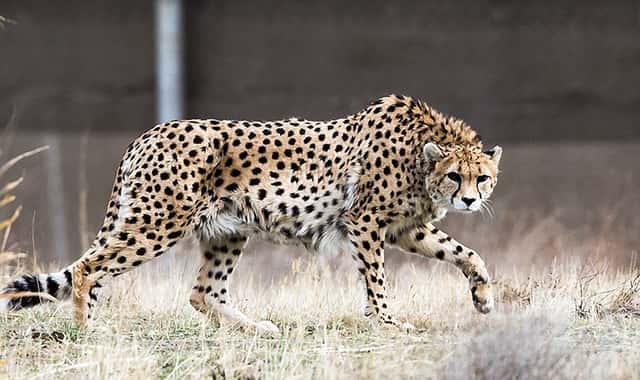
An Asiatic cheetah in Iran. (Tasnim News Agency/Wikimedia Commons)
Snapshot
The Asiatic
cheetah is on the verge of global extinction. Iran is the only country
in the world that still has any Asiatic cheetahs in the wild, and their
numbers are dwindling fast.
This is beyond critical. It is almost the point of no return.
The last surviving
male northern white rhino of the world has died. This leaves only two
females of the species to preserve the line, most likely through
assisted reproduction, though the chances of success are slim. There is a
tragic finality to the extinction of a species from the planet, and we
cannot escape our own culpability in giving shape to this tragedy. Most
mammals including rhinos first appeared on earth at least 3 million
years before the first Homininis – the common ancestors of
humans and chimpanzees – did. To have driven to extinction species that
roamed the earth for millions of years before us speaks clearly about
the dangerous manner in which humans as a species are aggressively
crowding out everything else out of existence.
India is home to
four out of six species of ‘big’ cats in the animal kingdom – lion,
tiger, leopard and the snow leopard. A fifth – the Asiatic cheetah
became extinct from India in 1952, with the last three remaining
individuals having been shot by Ramanuj Pratap Singh, the Maharaja of
Surguja state in present day Chhattisgarh.
The Indian royalty were
particularly fond of the cheetah as it could be trained to hunt
gazelles and deer. Moreover, the incredible speed and the immense feline
grace of a cheetah on the hunt fascinated the ancients no end. The
cheetah is the fastest mammal on land. Starting from rest, it can hit a
top speed of 120 kmph in just 3 seconds. By comparison, a Mercedes A45
AMG takes 4.5 seconds to hit the same speed. It is believed that Mughal
emperor Akbar took with him an army of 1,000 cheetahs each time he went
hunting. Unlike the lion and the tiger, the cheetah throughout history
has been more prized alive than dead.
A Large number of cheetahs
were captured from the wild and kept in the hunting grounds of Indian
maharajas. The problem, however, is that cheetahs never breed in
captivity. Thus each cheetah captured and kept in a maharajah’s palace,
however pampered, died without reproducing. The fad particularly picked
up after the British conquest of India as native rulers sought to overdo
each other in their pompous display of opulence and vanity to impress
their colonial masters. The number of cheetahs fell alarmingly in the
18th and the 19th century, finally dropping out of existence altogether
in the 20th. The Asiatic cheetah is the only animal in recorded history
to become extinct from India due to unnatural causes.
Today, the
Asiatic cheetah is on the verge of global extinction. Iran is the only
country in the world that still has any Asiatic cheetahs in the wild,
and according to latest reports,
their numbers are dwindling fast, with only 50 individuals remaining.
Such a tiny population can easily be wiped out due to natural causes
within a generation.
This is beyond critical. It is almost the point of no return. The Contested Politics Of Rehabilitation
India
has for long been in talks with Iran for reintroduction of the cheetah.
However, Iran has insisted that India exchange an Asiatic lion in
return, of which India is the last natural refuge. The cheetah is a
cultural mascot in Iran, just like the Lion in India. Being the last
natural refuge of an exotic and critically endangered species of wild
animal is lucrative in its own right, not the least because it becomes a
hot selling point with tourists and also brings in much needed
conservation funds from international agencies. Thus neither India nor
Iran feels willing to give up their status as the exclusive home of the
lion and the cheetah respectively.
Since the deadlock with Iran could not be broken, India looked towards Africa where the cheetah is still relatively numerous.
In
2009, there was much cheer among conservationists and wildlife
enthusiasts as proposals were announced to bring the African cheetah for
the reintroduction programme in India. A number of sites were narrowed
down after detailed studies as presenting the most potential for
supporting cheetah populations. These included Palpur-Kuno in Madhya
Pradesh, Kaimur wildlife sanctuary in Uttar Pradesh as well as the
Gajner wildlife sanctuary in Bikaner which used to be the hunting
grounds of the erstwhile Bikaner royals and once the home of a
significant population of cheetahs.
However, these
carefully laid out plans had to be dropped after scientists and
conservationists pointed out that the African and Asiatic cheetah were
two different sub-species that had separated from each other some 40,000
years ago leading to significant genetic differences.
If there is
one thing that modern ecological history has taught us, it is the risks
associated with reckless introduction of alien species to habitats
where they have not historically existed. For instance, the camel, was
introduced to Australia from India and Arabia by the British during the
19th century. It was transported via ships to be used to explore the hot
and dry Australian interiors which had hitherto remained inaccessible
to the white man. The camels adapted unexpectedly well to the Australian
outbacks and within a few years, their population went up
exponentially, causing severe environmental damage due to overgrazing
and overconsumption. Today there are estimated to be close to a million
camels roaming wild in Australia – a land where none existed till about a
hundred years ago. In monetary terms, it is estimated that the ‘alien’
camels cause $13 million worth of environmental and infrastructural damage each year, with several million dollars more spent each year in desperate attempts to reign in the rapidly increasing camel population.
In India, the zoological survey has listed at least 157 alien invasive species of fauna
that pose a threat to the biodiversity of India. The list of invasive
flora is even longer with some cases such as those of the Seemai Karuvelam tree posing critical ecological problems.
In
the face of such concerns, the Supreme Court of India has ordered all
plans for introducing the African cheetah to be put on hold until all
environmental concerns can be addressed.
Another option, though a
much less preferred one, is cloning using somatic cell transfer
technique. The main drawback with this technique is that success rates
in reproductive cloning are only around 5 per cent. However, positive results from an Australian programme
to clone an extinct species of frog, known as the Gastric Brooding
Frog, have ignited the imaginations of geneticists around the world. The
Australians have succeeded in bringing back to life a rare species of
frog that had gone extinct almost 30 years ago, using somatic cell
transfer techniques. Though still a long shot, the Australian example
throws up encouraging implications for the revival of other extinct
animals around the world. The Cheetah Can Save India’s Fast Disappearing Grasslands
Reintroduction
of the cheetah will not only impact tourism in the areas where it is
reintroduced, but will also lead to preservation of India’s dwindling
grasslands ecosystems. The cheetah mostly prefers open grasslands that
allow it to unleash its full and splendid gift of speed. It is a well
known fact that bringing back a top predator restores historic
evolutionary balance, which leads to preservation of the entire
ecosystem. For instance, India’s successful tiger preservation project
produced an incremental top-down effect that ultimately helped in the
rejuvenation of the entire forest ecosystem. In saving the cheetah, one
would not only be saving its large prey base but also several other
grassland species that are on the verge of extinction including the
caracal, the Indian wolf, the great Indian bustard etc. This in turn
will be a shot in the arm for the preservation of India’s fast
disappearing grasslands.
Additionally, among large carnivores, the
cheetah presents the lowest level of conflict with human interests, as
they are not a threat to human life and are most unlikely to prey upon
large livestock. By comparison, the most commonly found large cat in
India – the leopard – is commonly known to feed on livestock and
displays a high incidence of conflict with humans.
Right now, the
biggest hurdle for reintroduction of this majestic animal to its native
land is political. The Indian government has been unable to persuade its
own states to facilitate exchange of isolated endangered species, leave
alone executing such an exchange with another nation. For instance,
Gujarat has for long resisted any moves by the Centre to relocate the
Asiatic lion from Gir to other chosen sites.
Conservationists have
repeatedly pointed out that an isolated population of a few hundred
individuals like the one that exists in Gir is a recipe for disaster as a
single epidemic or natural calamity like a forest fire could wipe out
the entire population in one stroke. Repeated appeals have been made to
the state to allow the introduction of the lion in Palpur-Kuno in Madhya
Pradesh so that the population gets diversified. However, Gujarat has
dragged its feet on the matter since this would mean significant loss of
tourist revenue. India’s failed attempts at negotiating a
reintroduction of the Asiatic cheetah have been hit with similar
political hurdles. In the end, the only loser in this battle is our
natural heritage.
Kamalpreet works as a
policy analyst in the defence sector. He is also a researcher affiliated
with the University of Delhi. His areas of interest include history,
politics, and strategic affairs. He tweets at @KPSinghtweets.
https://swarajyamag.com/ideas/time-is-running-out-india-must-do-whatever-it-takes-to-save-the-asiatic-cheetah
The
majestic Asiatic Lion (Panthera Leo Persica) calls Gujarat its home,
and according to a 2015 census, around 523 big cats live in the
protected areas of the Gir forest. However, the state government
recently admitted in the Gujarat Assembly that around 184 lions died in
two years (2016 and 2017).
Of the 184 deaths, 32 lions died due to
unnatural causes. Many reasons can be attributed to the spike in
unnatural deaths, but at the root of the problem is the alarming fact
that 45-55 percent of Gir’s lion population lives outside the protected
areas.
Now the Gujarat High Court has intervened taking suo motu
cognisance and issued notices to the state government and the Centre;
the next hearing on the matter will be held on 18 April.
Gir’s Problem: Too Many Lions!
On
5 March, the state’s Forest Minister Ganpat Vasava told the Gujarat
Assembly that the unnatural deaths occur due to road accidents, open
wells with no concrete parapets, railway tracks passing through the
protected areas and forests, and electric fences securing agricultural
land.
Unnatural
deaths happened because around 40-45 percent lions live outside the
protected areas of Gir forest and are likely to meet with road and rail
accidents or get electrocuted while entering farm lands.
HS Singh, Wildlife conservationist and member of the National Board of Wildlife
Clearly
the Gir National Park has more far more Asiatic lions than it can
handle. In fact, HS Singh adds that the Asiatic Lion now shares the
territory with a growing leopard population as well. He estimates there
are over 500 leopards living there. They also compete with the lion for
territory and food, pushing even more lions out of the protected area.
In
2016, 104 lions including 33 cubs died in Gujarat, whereas 80 lions
including 38 cubs died in the year 2017. In all 12 lions died of
unnatural causes in 2016 while 20 lions in 2017 died of unnatural
causes.
Advocate
Hemang Shah filed a PIL on the unnatural lion deaths and is assisting
the court in the case. According to him the World Wildlife Fund (WWF)
had published a report claiming that wells have been barricaded with the
help of the state governments.
“If that report is true then
either new wells have been constructed or barricades on the existing
wells have been broken, or its just on paper. I have also demanded for a
complete ban on vehicles passing through forests after sunset. In 2010
the state government had proposed to close these roads but due to public
pressure they have not done it.”
Around 30 percent of dead lions are cubs hardly a week to two years old.(Photo: iStock)
Without
disagreeing with Shah, it may well be argued that Gujarat’s
conservators are fighting a losing battle. They have clearly done well
over the years in raising the population of the lions and other big
cats. This has inevitably led to greater human vs big cat conflict, as
the causes of the unnatural deaths reveal. One solution has been staring
Gujarat in the face for years but has steadfastly been ignored.
An Asiatic lion rests in Gir forest. (Photo: Reuters)
In
the 2018 CAG report, the Comptroller and Auditor General (CAG) has
lauded Gujarat’s efforts in conservation of lions but at the same time
stated that over 54.6 percent lions live outside protected areas and
that the government has not approved new protected areas in the last
decade.
According
to Conservation Scientist Ravi Chellam, “In 1994, about 30 percent of
the lions, which means more than 1,000 of them, died in Serengeti
National Park in Africa due to canine distemper. I’m not saying it is
guaranteed to happen in India, but if it happens it will be too late to
act as our ENTIRE population of wild Asiatic lions are in and around Gir
Forest, and could be decimated by a single epidemic. Translocation is
like buying the Asiatic Lion an insurance policy, a safety net.”
Wildlife
activist Faiyaz A Khudsar had filed a PIL in the SC in 2006 seeking
translocation of lions from Gir to Madhya Pradesh. He said,
“Distributing lions is the best idea and we have lost a big opportunity
in not sending them to MP already. They are all concentrated in one
area, now if there is an epidemic, protecting lions will be difficult.”
Translocation of Lions Going Slow
The
Supreme Court had issued a directive to move lions from Gujarat to
Madhya Pradesh on 15 April 2013. However, things are moving at a very
slow pace as stated by the Principal Chief Conservator of Forest, GK
Sinha.
The
SC has issued directive that lions do need to be translocated but under
International Union for Conservation of Nature (IUCN) guidelines.
Translocation is not an easy process as per IUCN, 33 studies are to be
conducted before translocation is done. So, this process will take some
time.
GK Sinha, Principal Chief Conservator of Forest (PCCF), Gujarat
Gir Lion resting in the shade.(Photo Courtesy: Wikimedia)
Ravi
Chellam, who was a member of an expert committee formed by the SC to
implement translocation, said, “It will be 5 years and counting since
the SC ordered translocation of lions. Around 2-3 weeks ago the matter
was again heard in response to a contempt petition filed in 2017
demanding action against the government of Gujarat and India for not
implementing the SC April 2013 order. Does the SC order carry any
validity?”
When asked by when the translocation programme will be
completed, GK Sinha said, “I cannot comment on when the translocation
procedure will be completed, that is something the Government of India
can answer.”
Tigers Get ‘Lion’s Share’ of Funding
The
Asiatic lion and the Bengal tiger are classified as ‘endangered’ on the
IUCN Red List of Threatened Species. However, when it comes to fund
allocation for conservation, Project Tiger received Rs 1,007 crore
between 2012 and 2017 from the Centre, whereas the mighty Asiatic Lions
only got Rs 25 crore.
Reply to West Bengal MP, Md Nadimul Haque’s query on fund allocation for lions(Photo: Rahul Nair/The Quint)
The
Union Minister of Environment, Forest and Climate Change, Dr Harsh
Vardhan stated that Gujarat government had sought central funding to the
tune of Rs 135 crore and had proposed bearing a share of Rs 15 crore
for lion conservation.Reply to West Bengal MP, Md Nadimul Haque’s query on fund allocation for lions.(Photo: Rahul Nair)
Vardhan
stated during last year’s monsoon Session of the Parliament, “The
requisite funds were not available under the centrally sponsored scheme –
‘Integrated Development of Wildlife Habitats (IDWH)’. The Gujarat
government was advised to review the proposal and prioritise activities
up to Rs 1 crore,” the minister replied to the query.
Gujarat Starts Project Lion
With
habitat loss and increase in the number of lions, the Gujarat
government has planned to start Project Lion, which aims at protecting
the big cat, especially those that stray out of protected areas.
PCCF of Gujarat, GK Sinha told The Quint,
“The government has done a lot to protect the lions of Gujarat. In the
current budget itself Rs 4 Crore has been allocated to ‘Project Lion’.
The Project aims at preserving corridors, eco-sensitive zones and lions
moving out of the protected areas. The project has been introduced to
ensure a comprehensive, systematic and scientific management of lions
that stray out of the protected areas.”
The
Chief Justice himself said that this not an adversarial litigation,
this is something that we have to work for the benefit of the lions.
A tiny
temple in Bherayi, a village in Gujarat’s Amreli district, reflects the
residents’ concern over the wellbeing of their pride — the Asiatic lion
in the Gir National Park.
The shrine, which doubles up as a
memorial, was built recently to make locals and authorities aware of the
need for safety of the lions following the death of two lionesses in
what is now called Greater Gir.
“Deeply disturbed by the deaths,
we built the memorial,” said Bhikha Jethva of the Lion Nature
Foundation, a non-government conservation group, this week.
Such
efforts with the government’s help gave Gir — the only place on earth
where Asiatic lions are found in the wild — a fresh lease of life.
The
lion population rose from an alarmingly low 13 in 1913 to a healthy 523
in 2015. And 40% of these lions now live in Amreli, Bhavnagar, Gir
Somnath and Porbandar districts in the Saurashtra region, moving through
19 corridors covering 22,000 square km.
Migration allowed a larger prey base for the lions, but this has also become their bane. Gujarat
forest minister Ganpat Vasava said in the state assembly on March 5
that Gir lost 184 lions in the past two years at an annual average of
92, compared to the yearly average of 62 deaths between 2010 and 2015.
Around one-third of these deaths were “unnatural” — being run over by
trains along tracks running through the forest, drowning in wells left
uncovered, and getting electrocuted by electric fences, the minister
said.
Spread over 1,882 square km, Gir has the capacity to accommodate around 300 lions.
The
population spurt has forced the lions to migrate to newer areas through
the corridors which, according to a forest official who did not want to
be identified, provide a natural balancing act.
“But trouble
occurs when there are obstructions in the free movement of lions through
these corridors,” said Ram Ratan Nala, deputy chief conservator of
forest, in charge of two Gir regions.
These obstacles are five
state highways and railway lines cutting through the lions’ land. These
apart, there are ports, cement factories and limestone mines along the
coastal corridor abutting the sanctuary. Around 23 shrines along
highways through the jungle bring the lions in direct conflict with the
people.
A 30km fence along the Rajula -Pipava railway tracks, built in 2016, has claimed 14 lions in the past two years.
“The
fencing has put an additional obstruction to wild cats in moving along
the coastal corridor,” said Jethva of the Lion Nature Foundation.
Uncovered
wells are another cause of worry. The forest department says 25,000
wells in and around the sanctuary have been covered with parapets. “But
lions are venturing into newer areas and open wells will continue to
remain death traps,” Nala said.
Another killer are the electric
fences farmers have installed to protect crops from animals such blue
bulls. Lions get electrocuted chasing their prey.
The debate over
Gir’s growing lion population and shrinking habitat has touched the
park’s tour guides and drivers of open Gypsies carrying tourists and
wildlife enthusiasts.
“Lions have been venturing into villages
for a long time. But now we are able to see them more often,” said
22-year-old driver Appu Bloch, who recently spotted a pair of lions at a
railway station.
Many households have rigged their homes, crop
fields and cattle pens with high barbed wire and electric fences.
According to Jumma Katiya, a resident of Sasan village, the fencing and
safety measures are a “small sacrifice” they have made for the lions,
knowing little that these have caused more harm than good.
The
Gujarat State Save Environment Committee (GSSEC), a Saurashtra-based
conservation group, wants the lions returned to the sanctuary, but the
forest department calls it an “impossible” demand.
Wildlife
experts say translocation of Gir lions to Kuno Palpur in Madhya Pradesh
is a possible solution. But critics of this move argue that the best
wildlife practices of Gir cannot be replicated elsewhere. The Supreme
Court in 2013 approved the relocation to Kuno.
Kishor Kotecha of
Wildlife Conservation Trust, Rajkot, filed a petition in the top court
challenging the relocation plan. The top court will hear the plea this
April. “Natural deaths have increased due to rise in population. We must
try to restrict the number of unnatural deaths,” he said.
People
like safari driver Bloch don’t want the relocation to happen. They say
they don’t mind lions lurking near their homes as they are part of the
family.
“No one gives away a family member,” he said, responding
to the court order to shift some of Gir’s lions to Kuno Palpur to ease
pressure on the Gujarat park.
Gir lost 184 lions in past two years, compared to the yearly average of 62 deaths between 2010-2015.
The lion population rose from an alarmingly low 13 in 1913
to a healthy 523 in 2015. And 40% of these lions now live in Amreli,
Bhavnagar, Gir Somnath and Porbandar districts in the Saurashtra region,
moving through 19 corridors covering 22,000 square km. (AP file photo)


 Photo: Flickr
 A lioness crosses paths with a policeman in Gir, Gujarat Credit: WIkimedia Commons
/arc-anglerfish-arc2-prod-shropshirestar-mna.s3.amazonaws.com/public/R5YTAJHYKJF6TGBVZ5OC3HCGDM.jpg)
/arc-anglerfish-arc2-prod-shropshirestar-mna.s3.amazonaws.com/public/XKIDMZXZ5JG3JHKB3XPUYGWLLM.jpg)
/arc-anglerfish-arc2-prod-shropshirestar-mna.s3.amazonaws.com/public/BHVPIP6EBBHLZL5J2BG2TJXFCI.jpg)
/arc-anglerfish-arc2-prod-shropshirestar-mna.s3.amazonaws.com/public/JAIFMRXAARG4RKN2ELYFKPMX6Y.jpg)


 Gujarat
forest minister Ganpat Vasava said in the state assembly on March 5
that Gir lost 184 lions in the past two years at an annual average of
92, compared to the yearly average of 62 deaths between 2010 and 2015.
Around one-third of these deaths were “unnatural” — being run over by
trains along tracks running through the forest, drowning in wells left
uncovered, and getting electrocuted by electric fences, the minister
said.
Gujarat
forest minister Ganpat Vasava said in the state assembly on March 5
that Gir lost 184 lions in the past two years at an annual average of
92, compared to the yearly average of 62 deaths between 2010 and 2015.
Around one-third of these deaths were “unnatural” — being run over by
trains along tracks running through the forest, drowning in wells left
uncovered, and getting electrocuted by electric fences, the minister
said. 
