Saturday, August 31, 2019

Tigers in India face lurking threat from virus

Aswathi Pacha August 03, 2019 18:28 IST
Loss prevention: Last year, over 20 lions from the Gir forest succumbed to the canine distemper virus infection, and now a guideline has been prepared by the National Tiger Conservation Authority . Loss prevention: Last year, over 20 lions from the Gir forest succumbed to the canine distemper virus infection, and now a guideline has been prepared by the National Tiger Conservation Authority .   | Photo Credit: Rajeev Bhatt

There is heightened risk of disease transfer from dogs to tigers, leopards in Ranthambhore National Park

The Prime Minister’s announcement that tiger numbers have increased in the country may be good news. But the loss of habitat, a decline of prey and poaching continues to be a threat to tigers’ survival. Along with these, a potential virus — Canine Distemper Virus (CDV) — that can be transmitted from CDV-infected dogs living in and around wildlife sanctuaries has started to raise concern among wildlife biologists.
Canine distemper is a contagious and serious disease caused by a virus that attacks the respiratory, gastrointestinal and nervous systems of puppies and dogs.

Risk of disease transfer

A recent study published in Threatened Taxa notes that 86% of the tested dogs around Ranthambhore National Park in Rajasthan carried CDV antibodies in their bloodstream. This means that the dogs are either currently infected or have been infected sometime in their life and have overcome the disease. This finding points out that there is an increased risk of disease transfer from the dogs to tigers and leopards that live in the park.
Last year, over 20 lions from the Gir forest succumbed to the viral infection and now a guideline has been prepared by the National Tiger Conservation Authority to prevent the spillover of the disease to wild animals.
“The main aim should be to vaccinate the free-ranging and domestic dogs in the area around national parks. A lot of NGOs have started started animal birth control programmes. They need more support from the government,” says Dr. Jimmy Borah, Consultant, Species Conservation and Law Enforcement, Panthera, and the corresponding author of the paper. “The disease needs to be recognised and more targeted studies need to be initiated to collect baseline data on CDV from wherever they are reported from in wild carnivores. Understanding the role of domestic animals as contributors to a local CDV reservoir is imperative precursor in considering control measures.”

Blood samples

The study was done from July to August 2015 when the team visited villages (in a 4 km radius) around the Ranthambhore National Park and collected blood samples from over 100 dogs. The results showed that 86% of the studied dogs had CDV antibodies in their blood. These dogs wander into the forest along with the humans, and there have been cases where leopard have hunted these dogs. “Studies from Russia and Africa have shown that small, isolated wildlife populations are more susceptible and when the virus transmits from one species to another the disease manifestation is worse,” adds Dr. Borah.

Easier route

“The easy way out is prevention. Managing any disease in a wildlife population is extremely difficult. Most dogs are free ranging and not owned by any particular person in the village. The government should take the initiative to vaccinate the dogs around wildlife sanctuaries in the country. This would be a good time to vaccinate against rabies as well. It is an investment that requires time and effort but increasing herd immunity will reduce chances of disease spillover to wildlife,” says Nadisha Sidhu, first author of the work. She was a researcher with the World Wide Fund for Nature-India when the work was done and is now a consultant for Ashoka Trust for Research in Ecology and the Environment, Bengaluru.
Ms. Sidhu says there were only a few CDV suspected cases in India when she started her work in 2015, and so was considered not important. But with the CDV confirmed deaths of lions in Gir, more attention has been drawn to the disease. She hopes more studies are conducted to get countywide data on the disease prevalence so that necessary prevention guidelines can be laid out.
https://www.thehindu.com/sci-tech/science/tigers-in-india-face-lurking-threat-from-virus/article28808001.ece

The Number Of Tigers Have Increased In India But This Virus Is Giving Authorities Sleepless Nights


Saket Suman
Updated: Aug 04, 2019, 18:23 IST

A potential virus called Canine Distemper Virus (CDV), which can be transmitted from CDV-infected dogs living in and around wildlife sanctuaries, is giving sleepless nights to wildlife biologists and raising concern among them. 
A serious, contagious disease caused by a virus that attacks the respiratory, gastrointestinal and nervous systems of puppies and dogs, Canine distemper is the reason behind their worry. 
Wildlife
AFP
The Hindu reported that according to a recent study, 86 per cent of the tested dogs around Ranthambhore National Park in Rajasthan carried CDV antibodies in their bloodstream. 
It implies that the tested dogs were either infected at the time of testing or had been infected at some earlier stage in their life. 
Wildlife biologists and enthusiasts maintain that there is an increased risk of disease transfer from the dogs to tigers and leopards that live in the park.
Wildlife
AFP
Notably, at least 20 lions from Gir forest lost their life to the viral infection in 2018, following which a guideline has been prepared by the National Tiger Conservation Authority to prevent it from spreading to other animals. 
“The main aim should be to vaccinate the free-ranging and domestic dogs in the area around national parks. A lot of NGOs have started started animal birth control programmes. They need more support from the government,” Dr. Jimmy Borah, Consultant, Species Conservation and Law Enforcement, Panthera, was quoted as saying in The Hindu. 
“The disease needs to be recognised and more targeted studies need to be initiated to collect baseline data on CDV from wherever they are reported from in wild carnivores. Understanding the role of domestic animals as contributors to a local CDV reservoir is imperative precursor in considering control measures,” he added. 
Wildlife
AFP
Incidently, there were only a few CDV suspected cases in India when in 2015, because of which the seriousness of the matter was not realised. However, with the CDV confirmed deaths of lions in Gir, it has now attracted both attention and concern among wildlife circles. 
Prime Minister Narendra Modi had recently led the country in celebrating the increased number of tigers in India. People across spectrum came together in this celebration and the internet was flooded with warm messages and snapshots from the wild. 
The tigers in India, however, still continue to face a number of threats to their existence, such as the loss of habitat, decline of prey and poaching. The threat from Canine Distemper Virus needs to be checked before it spreads further, putting our tigers at fatal risks.
https://www.indiatimes.com/news/india/the-number-of-tigers-have-increased-in-india-but-this-virus-is-giving-authorities-sleepless-nights-372820.html

Lion found dead in Gir forests of Gujarat


Junagadh, Aug 6 (UNI) The body of 12-year-old Asiatic lion was found on Tuesday in Devaliya range of Gir forests in Gir Somnath district of Gujarat.
CCF Junagadh D T Vasavada said that the body of the lion was found in Gala Dhar vistar close to Gundiyali bit of West Gir forests.
The reason behind the death of the beast was not yet known.
UNI RAJ JTS 2121
http://www.uniindia.com/~/lion-found-dead-in-gir-forests-of-gujarat/States/news/1690683.html

A trip to Gir, only place on earth to see Asiatic lion in the wild

A trip to Gir, only place on earth to see Asiatic lion in the wild
Gir forest evokes the same thrill among adults and schoolchildren as it is the only natural habitat of Asiatic lion in India. Incidentally, Gir is also the only place in the world where lions are found in the wild outside Africa.
These unique features make Gir the top destination for travellers. A visit to Gir would also make a person from Kerala wonder why lions are absent in the state's forests, that are rich in fauna.
Gir national park is situated in the Junagadh district of Gujarat. It was notified in 1975 to protect Asiatic lion. The forest, which was the favourite hunting ground of the Nawab of Junagadh, is also known as Sasan Gir. A deciduous forest, Gir hosts animals such as wild boar, nilgai, sambar, four-horned antelope, chinkara deer, striped hyena, langur, hedgehog, hare and black buck, apart from lion. In addition, mugger crocodiles and numerous reptile species are present in the sanctuary.
Another attraction of Gir is the reservoir of the Kamleshwar Dam which is a paradise for birdwatchers. Migratory birds such as flamingo and pelican arrive here during winter. The reservoir also has the distinction of having the presence of the largest population of crocodiles in India. During the latest census, around 350 crocodiles were counted.
Yet another interesting aspect of Gir is the sight of villages around the sanctuary where people of African origin live. In places such as Talala, there are settlements and streets where only Africans reside. A visitor to such areas would feel like having reached some remote village in the African continent. As per historical records, the residents of these villages where brought as slaves from Africa during the Mughal period.
The Gir national park remains closed to visitors from mid-June to mid-October during the monsoon. It opens by Diwali and hundreds of tourists arrive during the festival.
Seven rivers, including Hiran and Godavari, either flow through the Gir forest or originate from here. The forest comes alive with greenery during the monsoon but turns dry when summer set in. The barren forest takes on a grey appearance during the hot season; however, it is easier to sight lions during summer.
Gir is 350 km from Ahmedabad and travellers make it a point to visit the Somnath Temple and Diu near the forest before heading back. While Somnath is a pilgrimage centre, Diu is a beachside destination. Accommodation ranging from homestays to high-end hotels is available at all these places.
A railway track passes through 12 km of Gir forest. It is the Junagadh-Veraval metre gauge line.
While booking for a trekking through the Gir forest, remember that it can only be done online. The safari is available from 6.30 am and covers specific routes in the forest in a Gypsy. The duration of the trips is three hours. However, private vehicles are not allowed into the jungle tracks. There is another 12-km path where private vehicles, including two-wheelers, can pass but special permission is required here too.
https://travel.manoramaonline.com/travel/readers-discovery/2019/07/31/trip-to-gir-place-on-earth-to-see-asiatic-lion-in-wild.html

Body of lioness found, leopard electrocuted near Gir forests

Junagadh, Aug 1(UNI) The bodies of a lioness and a leopard were found in separate areas near Gir forest in Saurashtra region of Gujarat.
CCF Junagadh DT Vasavada today said that body of an around 11 years old lioness was found in
Bherala beat, Chanchai round and Paniya range of Gir east division of Amreli district.
Reason of death was not yet known.
In another incident in Jamavala range, Ghatavad round in West Gir in Gir Somnath district, a 9 to 12 years old female leopard was electrocuted in Bhimbhai mala bhai makvana's farm.
In yet another incident a 75-year-old woman was injured by a leopard in Mota sarakadiya village near Gir forests in Amreli district. Samjuben Khunt has been admitted to hospital with injuries on head and hand.
UNI RAJ JW2307
http://www.uniindia.com/~/body-of-lioness-found-leopard-electrocuted-near-gir-forests/States/news/1685792.html

Celebrate World Lion Day

Pions are amazing animals. Their roar can make your insides vibrate and their stare can inspire awe (and a little uneasiness) when you realize where on the food chain you reside.
We love our lions here at Lee Richardson Zoo and will celebrate World Lion Day from 3 to 5 p.m. on Saturday, Aug. 10. Let’s take a few minutes and learn a bit more about the amazing lion, including a bit more about the individual lions here at Lee Richardson Zoo.
Lions have been celebrated throughout history for their courage and strength. They once roamed most of Africa and parts of Asia and Europe. Today they are found only in parts of sub-Saharan Africa, except for one very small population of Asian lions that survives in India’s Gir Forest.
Lions are the only cats that live in groups, which are called prides. Lion prides are family units that may include up to three males, a dozen or so females and their young. All of a pride’s lionesses are related, and female cubs typically stay with the group as they age. Young males eventually leave and establish their own prides by taking over a group headed by another male.
Only male lions boast manes, the impressive fringe of long hair that encircles their heads. Males defend the pride’s territory, which may include some 100 square miles of grasslands, scrub or open woodlands. These intimidating animals mark the area with urine, roar menacingly to warn intruders and chase off animals that encroach on their turf.
Female lions are the pride’s primary hunters. They often work together to prey upon antelopes, zebras, wildebeest and other large animals of the open grasslands. Many of these animals are faster than lions, so teamwork pays off.
After the hunt, the group effort often degenerates to squabbling over sharing the kill, with cubs at the bottom of the pecking order. Young lions do not help hunt until they are about a year old. Lions will hunt alone if the opportunity presents itself, and they also steal kills from hyenas or wild dogs.
So, on Aug. 10 come by Lee Richardson Zoo for World Lion Day. Meet our amazing lions: the two males Bantu and Asani, two females Amali and daughter Lulu and our oldest male Razi. There will be fun and games, a keeper chat and lion enrichment. You can learn what Lee Richardson Zoo does to provide the best quality of life for our resident lions. You will also be able to learn how we help lions in the wild, and what you can do to help protect lions too.
To find out more about World Lion Day or Lee Richardson Zoo, visit www.leericharsonzoo.org or find us on Facebook by searching Lee Richardson Zoo.
Max Lakes is the curator of conservation education and deputy director at Lee Richardson Zoo.
https://www.gctelegram.com/news/20190801/celebrate-world-lion-day


Census reveals rapid growth of India's wild tiger population

Tiger Comeback Brewing in India, Census Numbers Show increase- photo -(image source-Fox News/youtube)

The tiger population in India increased by 30 percent, thanks to the government initiatives.

The tiger is one of the best-loved animals in the world. However, its habitat is strictly restricted to the subcontinent and India which accounts for 75 percent of the world tiger population. Tigers were at one time in abundance in the jungles of India, but during the days of the Raj their numbers started dwindling, and they were becoming rare. If this had continued, there was every likelihood of the animal becoming extinct.
This necessitated the launch of "operation tiger" to conserve the species.
Prime Minister Narendra Modi has stated that the Wildlife conclave at St.Petersburg had tasked India to try and increase the population of tigers by 30 percent, but India was able to achieve the target four years earlier.
India Today has reported that the UN chief Antonio Guterres has complimented the Indian effort.

Tiger census

The census of tigers commenced in 2014 and was completed in 2018.
The results have now been correlated, and it has been seen that the tiger population has gone from 2226 to 2967. This means a 30 percent increase in the tiger population. Tigers are found in almost 20 Indian states of India with the Bengal tiger taking pride of place as the most ferocious of the lot
The census was carried out by a dedicated team from the Wildlife Institute using the latest technology to count the tigers.
The exact number of tigers was counted, and it was ensured that there was no duplication of the animal count. Care was also taken to ensure that tigers in Bangladesh and Nepal were not counted in this census as they border India and are home to tigers. Downtoearth.org has mentioned that this tiger census could find a place in the Guinness Book of Records.

Future

Despite the increase in the population of tigers, the future is still difficult to predict.
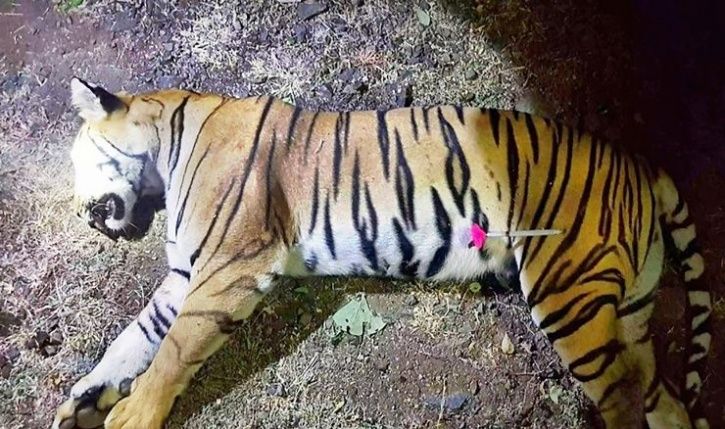
The Guardian hs reported that recently a group of villagers beat a tiger to death in the Indian state of Uttarakhand. The tiger had strayed from the Jim Corbett National Park and had attacked some villagers.
The tiger is part of Indian folklore, and there are many tales about the tiger in Hindu mythology. The goddess Durga is supposed to be riding on a tiger. Unfortunately during the days of the Raj, discriminate killing of tigers by maharajas and the British resulted in dwindling of the tiger population.
If this state of affairs had continued, the tiger would have become extinct. Similarly, the Great Asiatic lion has almost become extinct and is now confined only to the Gir forest sanctuary in Gujarat
The tiger is in a better position as it is spread all over the country.
Narendra Modi, the Indian Prime Minister who last year at G20 summit had demanded a favourable deal, is a wildlife enthusiast and he has joined Bear Grylls the famous adventure and wildlife photographer in a program sponsored by Discovery channel on wildlife in India.
This program will be beamed all over the world to 180 countries on 12th August this year. The trailer of the program is available on YouTube, and it is great to see the Indian prime Minister moving about in the Jim Corbett National Park.

Last word

A tiger population of 3000 is by itself a small number and calls for greater conservation efforts. The tiger population needs to be raised to 20000. The tiger is the pride of India, and it's a matter of honor that 75 percent of the population of the beast is in India. One hopes that this effort will be sustained and the villagers will be advised on the benefit of conserving the tiger.
Don't miss our page on Facebook!

Why The Lion King Should Matter To India Read more at: https://www.bloombergquint.com/opinion/why-the-lion-king-should-matter-to-india Copyright © BloombergQuint


The movie The Lion King echoes how we look at lions in real life – loving them to their deaths.
A fictional movie set in Africa has an unlikely connection to India. That of lions. The Lion King follows the story of Simba, an African lion, and his hero’s journey. He battles a bitter leonine rival, mangy hyenas and an upturned ecological balance to take his ‘rightful’ place as King of the Jungle. And because The Lion King is about saving and cherishing lions, this movie should have special relevance to India: the world’s last remaining Asiatic lion population is here.
In the annals of movie history, animated movies have a vaunted place. Leaping images bring things to life, uplifting us more than just moving us. They target children, but are watched by adults; they show slivers of dread and fear, but also order. They show us worlds we ache to be a part of, mostly because the ending is one of triumph and learning. The Lion King has been remade by Disney almost two decades later—and both movies are hits—demonstrating the universal themes of saving wildlife and nature.
But a lot has changed for Asiatic lions since the last movie, and not in a good way.
A lioness with her cubs at the Gir National Park in Gujarat. (Photograph: Gir National Park)
A 2013 Supreme Court order directed the government to relocate some wild lions to Madhya Pradesh, in order to stave off fears of an epidemic amongst the 500 odd Gir population. Wildlife populations in single locations are threatened by natural calamity and disease outbreak – in 1994, a Canine Distemper Virus outbreak had decimated at least thirty percent lions in Serengeti. The virus had jumped from domestic dogs to lions.
Last year, the predicted calamity happened – an outbreak of CDV killed several lions in the Gir landscape. Gir is also overrun with dogs and cattle that can be disease carriers. Official numbers said there were 34 lions deaths, but unofficial sources said the number was higher. The court order was not followed, and disease has come knocking. What could this mean?
Ironically, The Lion King’s particular gaze on lions holds a mirror to how we look at lions in real life.
A lion at the Gir National Park in Gujarat. (Photograph: Gir National Park)
The movie has a stylised, anthropomorphised view of lions. The lion is the king of the jungle, and has solid family values, ideas which contribute to its magnificence. Gujarat’s refusal to give up lions for the sake of species’ persistence reflects this human-centric view. On affidavit, the state said it could not part with its lions because they were ‘Gujarat’s pride’ and like ‘family members’ for the state. This familial love would be fine if the fitness of the animals was not at stake.
The CDV outbreak showed the danger of not only keeping all eggs in one basket, but also in loving something the way we want to, as opposed to how the subject needs to be cherished. Cartoons are great ways to communicate about potentially dangerous animals, as they minimise danger and make something look endearingly familiar.
One should not have to point out that cartoons don’t dictate real life, but the state seems to be looking at lions as familiar, domestic creatures more than as wild animals with real habitat needs.
A lioness at the Gir National Park. (Photograph: With permission from Sohail Madan)
In a first for big cat conservation, the lions were caught and vaccinated en masse after the outbreak. The state also announced a Rs 350 crore package for lions, which included drones for surveillance, CCTV cameras and medical ambulances.
The enterprise made Gir seem more of a safari rather than a wildlife sanctuary with natural processes. It also broke a tenet of wildlife conservation – of having minimal human intervention, so naturally resilient systems can form. Wildlife is not rounded up and vaccinated like pets in the wild because that interferes with natural selection of resilient animals that develop immunity. And though disease leads to natural population control, we must avoid population bottlenecks that form after habitats are cut off. Genetic studies prove that big cats like tigers are fitter and have more potential for genetic diversity if they disperse, and larger habitat also safeguards from physical risks of disaster.
With one single population on earth, we can hardly afford an infantilisation of the issue. We can’t love lions to their deaths.  
A lioness at the Gir National Park. (Photograph: With permission from Sohail Madan)
They are wild animals, and they necessarily need new habitat, rather than CCTV cameras. The Lion King is set in one location, the Pride lands, and even there, disease is not far away.
The lions of real life have their pride lands, but this is not enough: reports of them walking outside Gir, getting hit by trains or falling in wells abound (23 lions have died in this manner since 2017, while 222 lions have died in Gir between 2017-19).
There is also rising conflict outside Gir, and videos of people baiting and teasing lions for tourists have been doing the rounds for years.
And if art is intended to imitate life, the opposite is also true. While the movie literally lionises big cats, it also demonises hyenas. The entire species is shown as itchy, yucky and mean-spirited, which in human terms would be similar to a racist approach towards a community. This depiction perpetuates commonly held stereotypes of scavengers—hyenas are often persecuted in India.
Primitive, cartoonish understanding of animals should not be how we look at things in real life.
A lion at the Gir National Park in Gujarat. (Photograph: Gir National Park)
Finally, we can hardly hold movie fictions responsible for colouring our view; the fault lies with planning. The lion seems ready to move to new places, dispersing as far as the sea coast in Gujarat. Despite doing well on lion conservation otherwise, the authorities have caricatured the issue, denying lions their wildness.
We are in danger of believing in a happy ending because we are so fond of something. Yet, happy endings belong to animation movies, not real life. The lion doesn’t need parochial love, it needs space. If anything, we should enjoy cartoons in our free time so we can work for the subject in real time.
On the species’ terms, not ours.
Neha Sinha works with the Bombay Natural History Society.
Views expressed are personal. The views expressed here are those of the author and do not necessarily represent the views of BloombergQuint or its editorial team.