Thursday, December 26, 2019

Man Purchases Lion Nails Online, Held

A man was arrested on Wednesday for allegedly possessing two lion nails, which he purchased on Facebook, a forest official said.

Written By Press Trust Of India | Mumbai | Updated On:
A man was arrested on Wednesday for allegedly possessing two lion nails, which he purchased on Facebook, a forest official said.

Piyush Joshi was caught red-handed while receiving a parcel containing two lion nails at his home in Bhanduri village of Gujarat's Junagadh district, chief conservator of forests, Junagadh Wildlife Circle, Dushyant Vasavada said.

"The accused had ordered lion nails on Facebook, and he was caught while receiving the parcel that was delivered to him from Jhunjhunu in Rajasthan," he said.

It has been confirmed that the nails belong to an Asiatic lion, the senior forest official said.

The accused has been booked under various sections of the Wildlife Protection Act and will be produced in court on Thursday, Vasavada said.

The case is under investigation, he added.
  https://www.republicworld.com/india-news/general-news/man-purchases-lion-nails-online-held.html

Focus on the lion too

December 05, 2019 01:09 IST
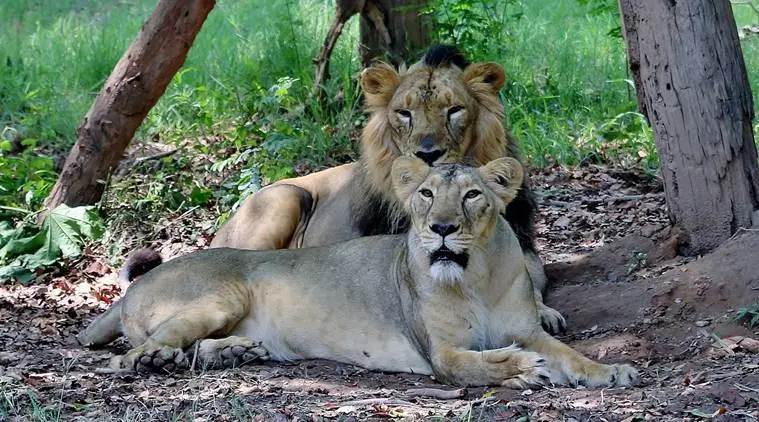
It is a piece of happy news for environmentalists that the tiger population of India has gone up. The government’s actions, especially steps by the National Tiger Conservation Authority, to conserve the big cat are laudable. While the tiger may be relatively safer now, there is another ‘endangered’ ‘big cat’ that has been in trouble for the past many decades — the Asiatic Lion. Its range is restricted to Gujarat and there have been deaths. It makes sense for the need for quick conservation of the species. The single population faces threats such as anthropogenic activities, epidemics such as Canine Distemper Virus and even natural disasters. The earlier plan to relocate the lions has been contested by some State governments. Conservation can take place only with the cooperative efforts of the Central and State governments.
Sravan Sivaram,
https://www.thehindu.com/opinion/letters/focus-on-the-lion-too/article30170900.ece

Killer leopards trigger need for population control policy

Nimesh Khakhariya | TNN | Dec 4, 2019, 4:03 IST

capRajkot: The increasing number of leopard attacks on people in human habitats has triggered an urgent need for a policy to ‘manage’ the rising population of these wild cats.
From April 2018 to March 2019, there were only three deaths in leopard attacks. According to forest department data, there has been a 400% rise in human deaths between April to December 2019 with the wild cats killing 13 people in districts of Saurashtra, mostly Gir region. In the same period, 49 people have been injured by leopards.
The forest department has received nearly 400 complaints of leopard menace in these nine months from villages of Junagadh, Amreli and Gir-Somnath districts.
Sources said that the National Board for Wildlife (NBW), following rising number of complaints of leopard menace from across the country, is mulling a strategy to ‘control’ their population.
Children and senior citizens, many of whom were sleeping in the open fields or outside their houses, were the most vulnerable to succumb while young and middle-aged survived the attacks with injuries.
HS Singh, wildlife expert and member of NBW, told TOI: “In India, elephants cause highest number of human deaths followed by leopards. There is a discussion on framing a policy to manage the population of the leopard in the country.”
At present, the only remedy is capturing the leopard that kills humans, keep them in enclosure for specific time period and release them.
When contacted, D T Vasavada, chief conservator of forest (wildlife circle) said, “It’s (population control) policy-level decision which has to be taken by the central government, but the issue is of genuine concern and being discussed at length in various meetings.”
According to the rough estimate of forest officials, there are nearly 650 leopards on the prowl in four districts of Gir region while there are close to 1,500 leopards in Gujarat.
https://timesofindia.indiatimes.com/city/rajkot/killer-leopards-trigger-need-for-population-control-policy/articleshow/72355886.cms

Swelling pride of Gujarat: Has numbers of lions crossed 1,000-mark?

Himanshu Kaushik | TNN | Updated: Dec 3, 2019, 7:30 IST

“Lions numbers would easily be 1,100-1,200 in the state,” said a top forest officialAHMEDABAD: Even as Lion Census 2020 is just five months away now, murmurs in the jungle suggest that the population of Asiatic lions may have easily crossed the 1,000 mark!

Top officials in the state forest department concede, on the condition of anonymity, that lion numbers are believed to have at least doubled that of 523 lions, the population last counted in 2015. Next census is slated in May next year.
“Lions numbers would easily be 1,100-1,200 in the state,” said a top forest official.
Sources say that internal assessment of lions by the state forest department has been suggesting a robust lion population for quite some time now.
This is reflected in the ever expanding footprint of the lions which now have official presence in at least seven districts.
Tracking royals: 350 lions have micro-chips embedded
This is reflected in the ever expanding footprint of the lions which now have official presence in at least seven districts — Junagadh, Gir Somnath, Amreli, Bhavnagar, Porbandar, Rajkot and Surendranagar. Recently, lions had hit headlines when two of them were spotted in Dedhuki village, merely 20km away from temple town of Chotila.
Lending further credence to rising numbers of big cats is the revelation that number of lions with micro-chips embedded is over 500. These lions are in the age-group of 3-13 years.“Micro-chips are inserted in lions that have been caught at least once by forest officials and caged. These lions are mainly caught from revenue areas for having strayed into villages, falling in wells or even attacking villagers,” said a senior official. “As no duplication is possible in this advance identification process, 500 lions being inserted with micro-chips itself is a major indicator of a solid population.”
Experts say that there is a strong possibility that apart from these 500 lions, there should be over 20% or 150 lions in 3-13 years that were not caught. "Add this with 400-odd lions less than 3 years old and above 13 years, numbers cross 1,000,” explained a senior official.
Top Comment
Initiatives taken by Gujarat government & promotion of Gujarat tourism by Shri AMITABH BACHHAN HELPED to achieve this target.
Rahul Chauhan
See All CommentsAdd comment

Wildlife expert AJT Jonsingh said that as he has not visited Gir for many years he cannot comment on the specific lion numbers. "I surely feel that if 500 lions were micro-chipped, then lions numbers could be much higher than 600", said Jonsingh. Last year, CM vijay Rupani had stated that lion numbers have reached 600 in Gujarat due to conservation efforts.Another senior lion expert said government has always been loathe to admitting the real numbers of lions for fear of triggering public panic and pressure from wildlife fraternity to translocate lions to MP for better conservation.
"It is time institutes like Wildlife Institute of India (WII) that has expertise in tiger census is roped in for lion census too with camera trap methods to count the exact lion population. This is crucial for better lion conservation and management plan," said the expert.
https://timesofindia.indiatimes.com/city/ahmedabad/swelling-pride-of-gujarat-has-no-of-lions-crossed-1000-mark/articleshow/72340715.cms

CCMB completes genome analysis of vulnerable bear cats


Bearcat is known as a keystone species in the rain forest ecosystem because of its special relationship with fig trees. Being a species that fully subsist on fruits, the animal facilitates and propagates seed germination for fig.

Blood samples of bearcat were collected from Sepahijala Zoo in Tripura for DNA analysis

By Author  |  Published: 3rd Dec 2019  1:10 am
Hyderabad: Researchers from Centre for Cellular and Molecular Biology (CCMB)-Laboratory for Conservation of Endangered Species (LaCONES) have completed the genome analysis of the highly vulnerable Indian species of bear cats, also known as binturong.
This is for the first time that researchers have concluded the genome sequencing of a wild-caught binturong of known provenance belonging to the Indian subspecies Arctictis binturong albifrons, using Next-Generation Sequencing (NGS) methods.
The genome sequencing work on bearcats by CCMB-LaCONES was published in the ‘PeerJ-Journal of Life and Environment’ this November and was led by LaCONES senior scientist, Ajay Gaur and funded by Council for Scientific and Industrial Research (CSIR).
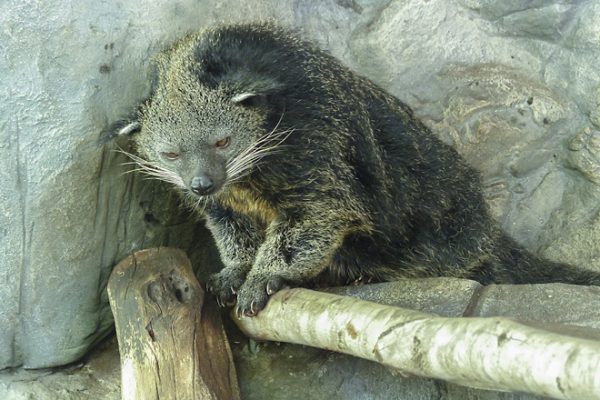
Bearcats or binturongs are unique because of their cat like face, a bear like small body and a tail that is almost similar to a monkey. They inhabit in the rain forests of NorthEast India and are characterised by coarse, black fur and a prehensile tail.
The blood samples of the bearcat were collected from Sepahijala Zoo in Tripura for DNA analysis and also deposited in the Genome Bank at the Laboratory for Conservation of Endangered Species (LaCONES), CCMB.
Genome sequencing of the entire DNA which is the process of determining the complete DNA sequence of an organism’s genome, will eventually help in conservation. In the last three-decades, according to conservationists and animal welfare activists, there has been a 30 per cent decline in bearcat population.
Researchers said that the bearcat was known as a keystone species in the rain forest ecosystem because of its special relationship with fig trees. Being a species that fully subsist on fruits, the animal facilitates and propagates seed germination while fig tree provides a stable dietary source to the animal.
According to the LaCONES study, there were nine subspecies of bearcat spread across Southern and SouthEast Asia. ‘Further molecular studies are required to test the distinctiveness and diversity of the nine putative subspecies of binturong,” the LaCONES study said.
Binturongs are presently being poached for their meat, traditional medicines and the pet trade, and alongside habitat destruction, these factors have contributed to decreasing the numbers of binturong to a few geographical pockets across the species’ former range. As a result of these increasing pressures, the binturong is listed as ‘Vulnerable’ on the IUCN Red List of Threatened Species, the study said.

Achievements of CCMB-LaCONES

Asiatic Lions

The researchers at CCMB-LaCONES led by Ajay Gaur took-up study of genetics and population structure and evolutionary history of the Asiatic lions in the Gir forests in India. The study was taken up because the entire wild population of the lions are confined to a single location, as a result the Asiatic lion is facing an increased risk of extinction because of very low numbers and continuous inbreeding. The CCMB-LaCONES reported the first draft of the whole genome assembly of male Asiatic lion.

Stress levels on Indian tigers

The CCMB-LaCONES researchers led by G Umapathy also conducted study on tiger, the critically endangered species. The researchers studies the physiological stress response of tigers due to disturbance such as encounter rates from livestock and humans etc in three tiger reserves including Sariska, Bandhagarh and Kanha. Studies found that stress levels among tigers were high during tourism period and low during non-tourism period.

Indian Mouse Deer

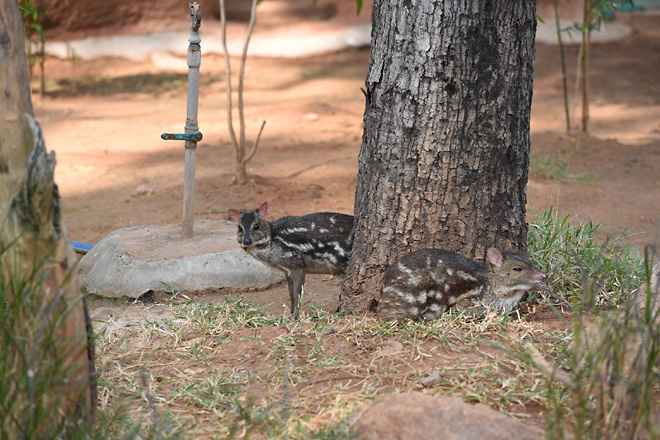
The researchers at LaCONES collaborated with the conservation experts in Nehru Zoological Park for conservation breeding and reintroduction of Indian Mouse Deer in Telangana. The captive mouse deer population by the end of October 2019 increased to 173 animals. The release of the mouse deer was done in Amrabad tiger reserve, Kinnerasani wildlife sanctuary and Mrugavani National Park.


Now you can get handpicked stories from Telangana Today on WhatsApp / Telegram everyday. Click these links to subscribe and save this number 9182563636 on your contacts.
https://telanganatoday.com/ccmb-completes-genome-analysis-of-vulnerable-bear-cats

Rhinos in Corbett

The Uttarakhand wildlife board’s decision to introduce the Asian one-horned rhinoceros into the grasslands of the Jim Corbett National Park has enthused wildlife activists, who were campaigning to bring the gentle giant back to an area named after the great conservationist and hunter of man-eating tigers and leopards. The rhinos had earlier been introduced into the Dudhwa National Park in neighbouring Uttar Pradesh, which has a terrain similar to rhino habitats below the Himalayas in Assam, Bengal, Nepal and Bhutan. The rhinos had, centuries ago, been natural to the area now named after Corbett, but became locally extinct. The decision needs the endorsement of the Central government, which has been encouraging such relocation programmes.
The most successful in recent years has been the reintroduction of tigers into wildlife sanctuaries from which the striped carnivore had disappeared, like Panna in Madhya Pradesh and Sariska in Rajasthan. The reintroduction has been so successful that there are grumblings that Panna is getting overpopulated. While tigers roam in 50 wildlife parks from Kerala to Rajasthan, recent camera trap records show the presence of tigers in the icy Himalayan heights of Arunachal Pradesh. This has excited tiger watchers as the Himalayas are better known as the home of the elusive snow leopards. The country has also successfully relocated other species like the gharial and several deer species.
Illustration: Bhaskaran Illustration: Bhaskaran
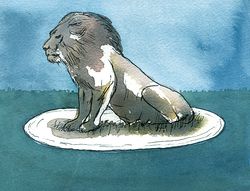
One relocation plan that has failed to materialise is the search for a second home for Asiatic lions, now found only in Gir, Gujarat. There have been pleas that it is dangerous to concentrate the entire population of 600-odd lions in one sanctuary, and to move a small number to a similar habitat in another state. The Madhya Pradesh government identified the Kuno-Palpur sanctuary exclusively for the relocated lions. (Since ancient times, lions have symbolised state power.) But the Gujarat government dug its heels in, refusing to transfer the lions, saying Gir was large enough. When two dozen lions died last year—some victims of the canine distemper virus—the demand was renewed. But Chief Minister Vijay Rupani described the fear of mass extinction of the big cats as exaggerated, and said they were absolutely safe. The Madhya Pradesh government has renewed the proposal, with some of its Congress politicians saying Gujarat is not magnanimous enough to give up the unique identity of being the only home of Asiatic lions. But Gujarat says Kuno-Palpur suffers from handicaps such as low prey base and the presence of tigers. Interestingly, tigers are unknown in Gujarat, though a recent video of a tiger sighting on a state highway created some buzz. Gujarat also says it had relocated some animals to a lion safari in Etawah in Uttar Pradesh, and they had perished.
The issue had gone up to the Supreme Court, which had also ordered the leonine relocation, but there was no follow-up as the BJP ruled both the Centre and Gujarat. Till last year, Madhya Pradesh was also ruled by the BJP, and it was delicate to press Gujarat to part with its pride.
Wildlife activists are sure that one day the relocation will help. Meanwhile, there are campaigns to find new habitats for dozens of wildlife species that are threatened with loss of habitat and other dangers. The sight of rhinos grazing alongside elephants and other herbivores will add to the excitement in Corbett.
sachi@theweek.in
https://www.theweek.in/columns/Sachidananda-Murthy/2019/11/29/rhinos-in-corbett.html

Leopard found dead in Uttarakhand

Almora (Uttarakhand) [India] Dec 1 (ANI): A leopard was found dead in Uttarakhand's Dharanaula on Sunday.
Initial investigation suggests the leopard was hit by a speeding vehicle at the Dharanaula-Pithoragarh Road. The carcass was found with grave injuries in the face.
Officials from the forest department reached the spot and took the dead feline to their centre to ascertain the exact cause of the death.
The Indian leopard is one of the big cats found in the Indian subcontinent, apart from the Asiatic lion, Bengal tiger, snow leopard, and clouded leopard. (ANI)
https://in.news.yahoo.com/leopard-found-dead-uttarakhand-072408234.html

Restoring Saurashtra’s grasslands is key for the big cats to thrive in their natural habitatRestoring Saurashtra’s grasslands is key for the big cats to thrive in their natural habitat

Though lions are carnivores, there is an umbilical link between grass and the big cats. Grass is the starting point of all major food chains.

Dheeraj Mittal

The writer, an IFS officer, presently serves as deputy conservator of forest, Gir West Forest Division in Junagadh. Views are personal
Mon, Dec 02, 2019
Just like with lion conservation, grassland restoration can also be done with the participation of local communities. They can help in tending grasslands and clearing any woodlots, if required. Part of the proceeds from wood clearing can be shared with the panchayats...
https://indianexpress.com/profile/columnist/dheeraj-mittal/

Restoring Saurashtra’s grasslands is key for the big cats to thrive in their natural habitat

Asiatic lion eating grass, lion eating grass video, lion eating grass, Gujarat lion eating grass, Saurashtra lions, gujarat forest, Herbivore Census, Herbivore Census gujarat, asiatic lion, 

Just like with lion conservation, grassland restoration can also be done with the participation of local communities. They can help in tending grasslands and clearing any woodlots, if required. Part of the proceeds from wood clearing can be shared with the panchayats.

Written by Dheeraj Mittal | Updated: December 2, 2019 10:02:24 am
Recently, a video showing an Asiatic lion eating grass went viral on social media in Gujarat. Many wondered if lions indeed eat grass! As a matter of fact, wild carnivores often eat grass when they have a stomach upset so as to vomit undigested food, and in some cases, to encapsulate shards in bony food.
Though lions are carnivores, there is an umbilical link between grass and the big cats. Grass is the starting point of all major food chains. Wild ungulates like spotted deer, blue bulls (nilgai), sambar, wild boars etc, which form the main prey-base of Asiatic lions, dependent on good grass. Their habitat comprises grasslands and open patches.
The Saurashtra region is interspersed with 106 reserved vidis (grasslands) maintained by the forest department and 434 non-reserved vidis controlled by other agencies. They are spread over 1,810 sq km, making up 20 per cent of total grassland cover in Gujarat. Private vidis, gauchars (community grasing-lands controlled by village panchayats) and government wastelands supplement these vidis. Most of these vidis are part of the 22,000-sq km Greater Gir landscape, the last abode of Asiatic lions.
A good lion habitat must have a good prey-base. For a healthy prey-base, grasslands are the key. Lion conservation efforts are focused on habitat improvement and, by extension, on improvement of grasslands. Dispersal of lions from the core Gir forest was possible due to a matrix of grasslands and open patches in the Greater Gir area. It is imperative, therefore, to initiate landscape-level interventions to ensure that the lion population keeps thriving. Since these big cats coexist with local agro-pastoralists, minimising competition for natural resources between wildlife and local communities is crucial. Productive grasslands can help achieve this. They can make a very good habitat for lions while also meeting requirements of the locals.
Lions have been dispersing out of the core Gir forest for the past 15 years. According to the 2015 census, out of total 523 Asiatic lions, 167 were living outside protected forests. That is one-third of their population. The lions living outside protected forests have made these grasslands in revenue areas their home. Hence, these grasslands will be critical to lions’ further dispersal and sustaining their robust population growth seen over the past couple of decades.
Over a period of time, however, these grasslands have degraded owing to invasion of woody and shrubby species and have turned into somewhat unproductive woodlots. Hardly any grass grows in them now. Instead, growth of species like lantana, prosopis, van tulsi and cassia defines their vegetation. This vegetation is unpalatable for wild ungulates and domestic animals.
The progressive degradation of grasslands has exacerbated some of the present problems like shortage of fodder, lack of good grazing grounds for maldharis (a semi-nomadic pastoralist community), increase in crop depredation by wild herbivores etc. Eventually, it can prove detrimental to animal husbandry, which, after agriculture, is the other major occupation in Saurashtra. As grasslands on forest fringes become unsuitable for wildlife and local livestock, the fringe further shifts towards agricultural fields and human settlements. This, in turn, is aggravating human-wildlife conflict. In the long run, such a scenario may sour the unique sentiment and goodwill the local communities have for wildlife in general and lions in particular.
This gradual, unattended shift has affected both ecology and economics of the region. Village panchayats are unable to maintain their gauchars for lack of resources. Nor do they consider managing their gauchars and wastelands a priority. The continued apathy is resulting in large-scale encroachment on such swathes and soil mining from such patches. There aren’t many management interventions by the forest department either in the non-reserved vidis. The net result is that the landscape is suffering the tragedy of commons and a vicious self-perpetuating circle of unproductiveness.
For long-term ecological and economic security, all stakeholders need to make a collective effort. The forest and revenue departments and panchayats need to take up a joint mission to restore these grasslands. Good productive grasslands are extremely important for fodder security. For instance, the more than 1.6 crore kg of grass collected by the forest department from reserve vidis in 2018-19 will be available for distribution in the event of a drought. Grasslands are important for water security too as they serve as great watersheds. The conflict due to crop depredation and lions venturing into human habitations can also be mitigated if grasslands are maintained and managed properly. Wild herbivores naturally prefer open and productive patches and thereby keep carnivores interested in such areas. Grassland restoration will also help in the conservation of bustards, floricans, wolves, blackbucks and many other wild species that share a similar habitat.
Wildlife conservation and sustainable utilisation of grasslands are not mutually exclusive pursuits. Grassland restoration will not only have positive ecological effects on long-term lion conservation, it will also yield significant socioeconomic benefits to the locals. Just like with lion conservation, grassland restoration can also be done with the participation of local communities. They can help in tending grasslands and clearing any woodlots, if required. Part of the proceeds from wood clearing can be shared with the panchayats.
The recent UN-led conference to combat desertification committed to achieving land degradation neutrality by 2030. At this conference, India committed to restoring at least 26 million hectares of degraded land by 2030. Gujarat can begin with restoration of the grasslands in Saurashtra.
This article first appeared in the print edition on December 2, 2019 under the title ‘Grass for lions’. The writer, an IFS officer, presently serves as deputy conservator of forest, Gir West Forest Division in Junagadh. Views are personal
https://indianexpress.com/article/opinion/columns/gujarat-saurashtra-asiatic-lion-eating-grass-video-6146005/